

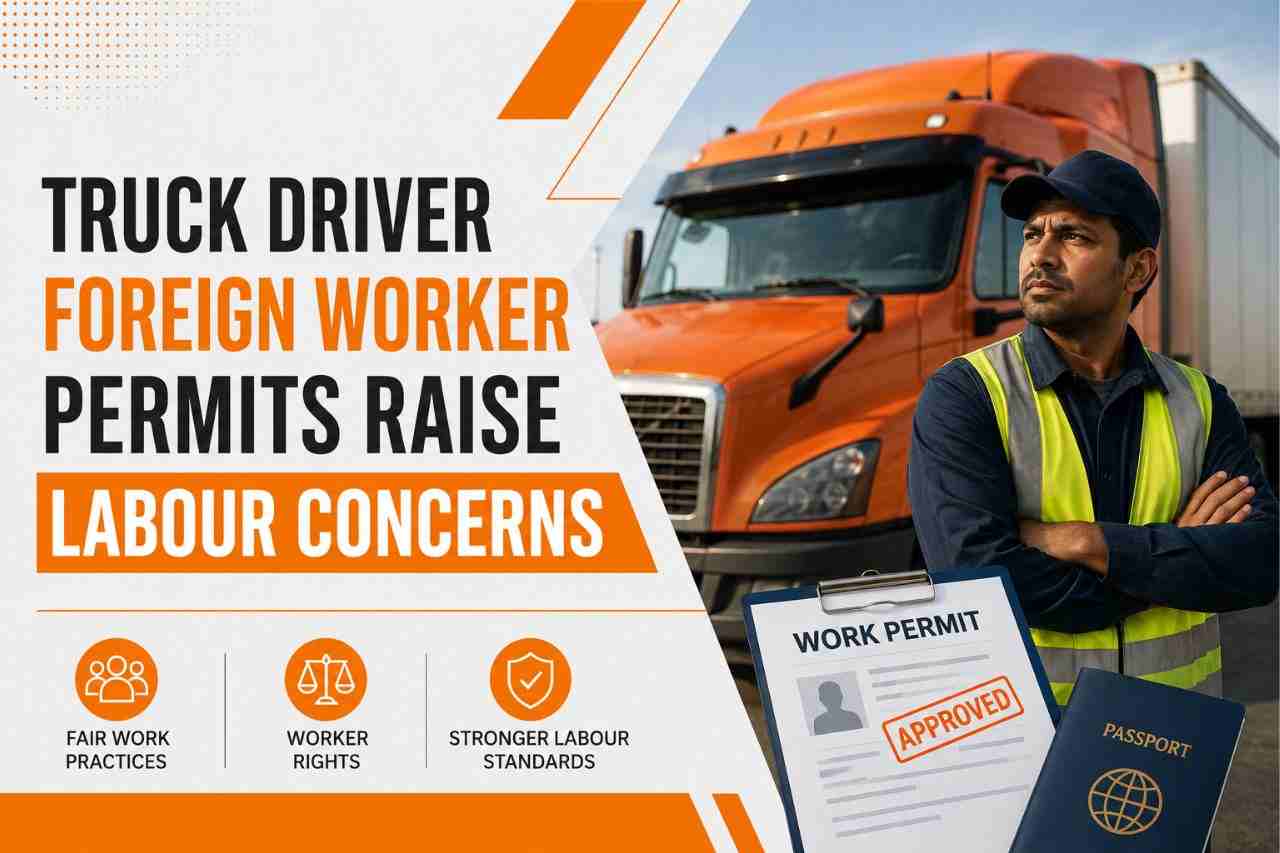

Truck driver foreign worker permits are under growing scrutiny after a new report revealed that approvals for Temporary Foreign Worker permits in the trucking sector more than quadrupled between 2010 and 2024. The report argues that the industry’s labour shortage is actually tied to poor wages and working conditions rather than a lack of available workers. It also highlights concerns around the “Driver Inc.” model, where drivers are allegedly misclassified as independent contractors, limiting access to benefits and legal protections.
Key Highlights of Truck Driver Foreign Worker Permits
The report raises several concerns about the trucking industry:
- TFW permits for truck drivers quadrupled from 2010 to 2024
- Employers accused of relying on vulnerable migrant labour
- “Driver Inc.” model linked to worker misclassification
- Concerns raised over wage stagnation and poor conditions
- Calls for stronger enforcement and labour protections
Source: Truck Driver Foreign Worker Permits Update
The rise in truck driver foreign worker permits is fueling broader conversations about labour standards in Canada.
Who Could Be Affected by Truck Driver Foreign Worker Permits
The issue impacts multiple groups:
- Temporary foreign workers in trucking
- Canadian truck drivers facing wage pressure
- Employers operating within the industry
- Policymakers reviewing labour standards
The debate also affects broader discussions around work permits and worker protections.
The report argues that employers increasingly rely on closed work permits, which tie workers to one employer and may discourage them from reporting unsafe conditions or wage issues.
Labour groups are calling for stronger protections, including better enforcement against worker misclassification and more pathways to permanent residency for migrant workers.
At ImmigCanada Immigration Consulting Services, our licensed RCIC, Eivy Joy Quito helps workers and employers understand Canadian work permit requirements and immigration compliance rules. Our team provides guidance on legal pathways and employer obligations.
What This Means for Work Permits in Canada
The discussion around truck driver foreign worker permits may lead to policy reforms in Canada’s labour and immigration systems.
Possible changes include:
- Reduced reliance on closed work permits
- Stronger enforcement against worker misclassification
- Improved labour standards for drivers
- Expanded PR pathways for long-term workers
Future immigration reforms may place greater emphasis on fair labour practices.
Understanding issues surrounding truck driver foreign worker permits is important for workers and employers using Canada’s work permit system. Labour standards, employer compliance, and immigration policies are closely connected. Readers can explore work permits and immigration pathways through ImmigCanada Immigration Consulting Services for updated guidance on Canadian immigration programs.
Looking to work legally in Canada? Connect with ImmigCanada Immigration Consulting Services to understand your work permit and PR options.
Frequently Asked Questions (FAQs)
The trucking industry has increasingly relied on temporary foreign workers over the past decade. Employers cite labour shortages, while critics argue poor wages and working conditions are the real issue.
The “Driver Inc.” model involves classifying drivers as independent contractors instead of employees. Critics say this limits worker protections and benefits.
Closed work permits tie workers to a specific employer. Workers may face difficulties changing jobs without affecting their immigration status.
Yes, labour groups are calling for stronger enforcement, better worker protections, and reforms to Canada’s work permit system.
Labour groups argue that the issue lies with employer practices and labour policies rather than migrant workers themselves.