

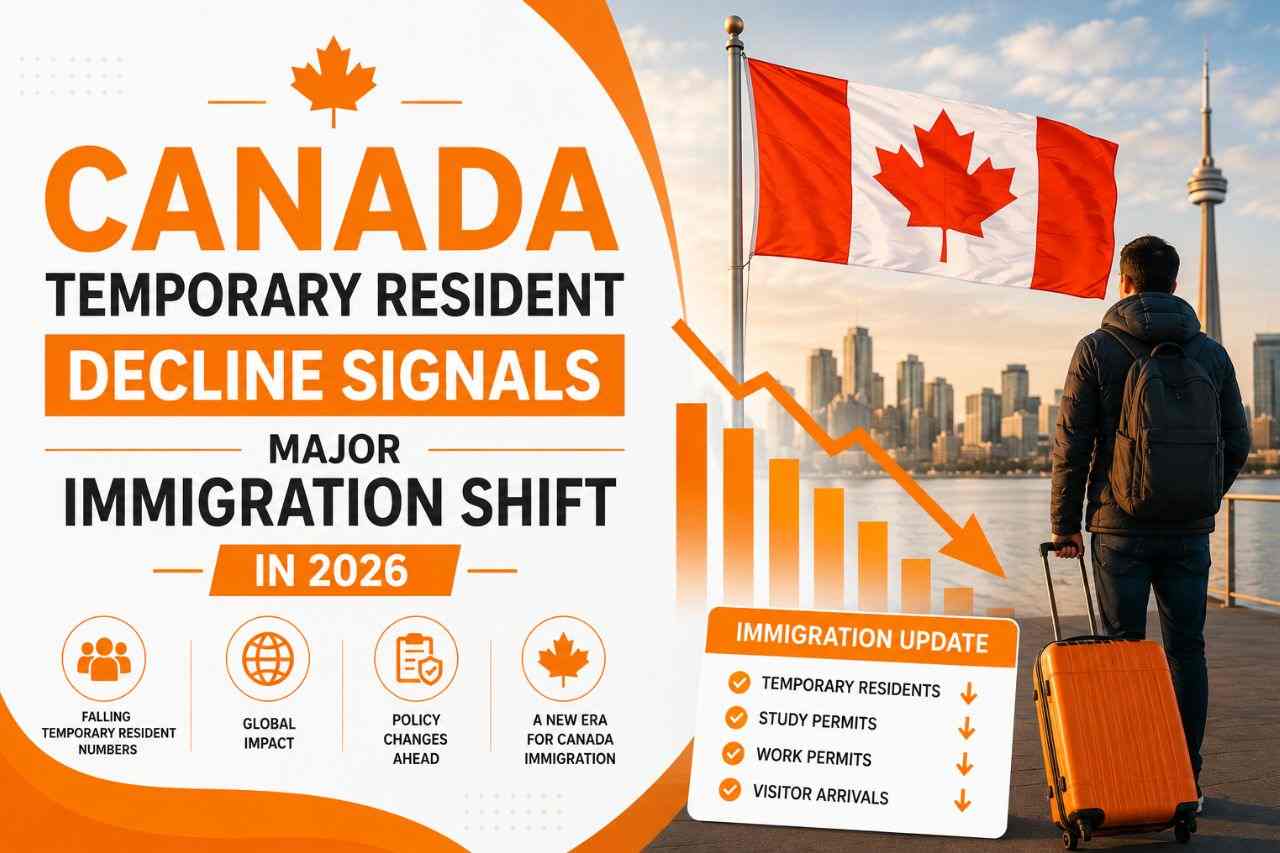

Canada has reported a dramatic drop in new temporary resident arrivals as the Federal Government tightens immigration controls under its latest Immigration Levels Plan. New data shows that arrivals of international students and temporary foreign workers fell by 75 percent between January and March 2026 compared to the same period in 2024. The sharp decline follows stricter study permit caps, reduced temporary foreign worker intake, and tighter work permit eligibility rules.
At the same time, Canada is increasingly prioritizing temporary residents already living in the country for permanent residence pathways through programs like Express Entry and Provincial Nominee Programs.
Key Highlights on Canada’s Temporary Resident Decline
Canada’s latest immigration data reveals several important changes:
- New student and worker arrivals dropped by 75 percent in early 2026
- International student arrivals declined by 79 percent
- Temporary worker arrivals fell by 74 percent
- Canada plans to reduce the temporary resident population below 5 percent by 2027
- Over 59 percent of new permanent residents in 2026 were former temporary residents
- Stricter study permit caps and TFW rules are now in effect
- Canada continues prioritizing in-Canada applicants for permanent residence
These measures are designed to reduce pressure on housing, infrastructure, and public services while maintaining long-term economic growth.
Why Canada Is Reducing Temporary Resident Numbers
The Federal Government says the changes are part of a broader strategy to create a more sustainable immigration system.
Recent reforms include:
- Annual caps on study permits
- Tougher financial requirements for students
- Restrictions on low-wage Temporary Foreign Worker Program hiring
- Reduced eligibility for spousal open work permits
- Stricter Post-Graduation Work Permit (PGWP) requirements
Officials believe these changes will better align immigration with labour market needs and housing capacity.
Expert Analysis on Canada’s Immigration Strategy
At ImmigCanada, we are seeing a major policy shift toward retaining skilled individuals who are already integrated into Canadian society.
Our RCIC, Eivy Joy Quito (License #R512178), explains that Canada is increasingly favouring candidates with Canadian work experience, education, and language proficiency. This is especially visible in Express Entry and Provincial Nominee Program selections.
For international students and temporary workers already in Canada, this may create stronger permanent residence opportunities. However, new applicants outside Canada could face increased competition and stricter eligibility requirements.
Applicants exploring study permits, work permits, or permanent residence pathways should closely monitor policy updates and application requirements.
You can explore your options through our:
- Canada Study Permit Programs
- Express Entry Immigration Pathways
- Provincial Nominee Program (PNP) Streams
What This Means for Future Applicants
Canada remains open to immigration, but the focus is shifting toward quality, economic integration, and sustainability.
Future applicants should expect:
- More selective immigration processing
- Stronger emphasis on labour market alignment
- Increased competition for study permits
- Greater preference for candidates already in Canada
- Faster PR pathways for in-demand workers
Planning ahead and building a strong immigration profile will become increasingly important.
How ImmigCanada Can Help
Immigration policies are evolving rapidly, and professional guidance is more important than ever.
At ImmigCanada, our licensed RCIC, Eivy Joy Quito helps students, workers, and families navigate Canada’s changing immigration system with confidence.
Whether you are applying for a study permit, work permit, or permanent residence, we can help you identify the best pathway based on the latest immigration rules.
Frequently Asked Questions (FAQs)
Canada introduced study permit caps and stricter financial requirements to reduce pressure on housing, infrastructure, and public services.
Yes. Canada has tightened low-wage Temporary Foreign Worker Program hiring limits and updated eligibility rules for employers and applicants.
Yes. Canada is increasingly selecting temporary residents already living and working in Canada for permanent residence pathways.
Competition may increase due to annual caps and stricter immigration policies affecting international student applications.
Programs like Express Entry and Provincial Nominee Programs continue offering strong opportunities for skilled workers already in Canada.