

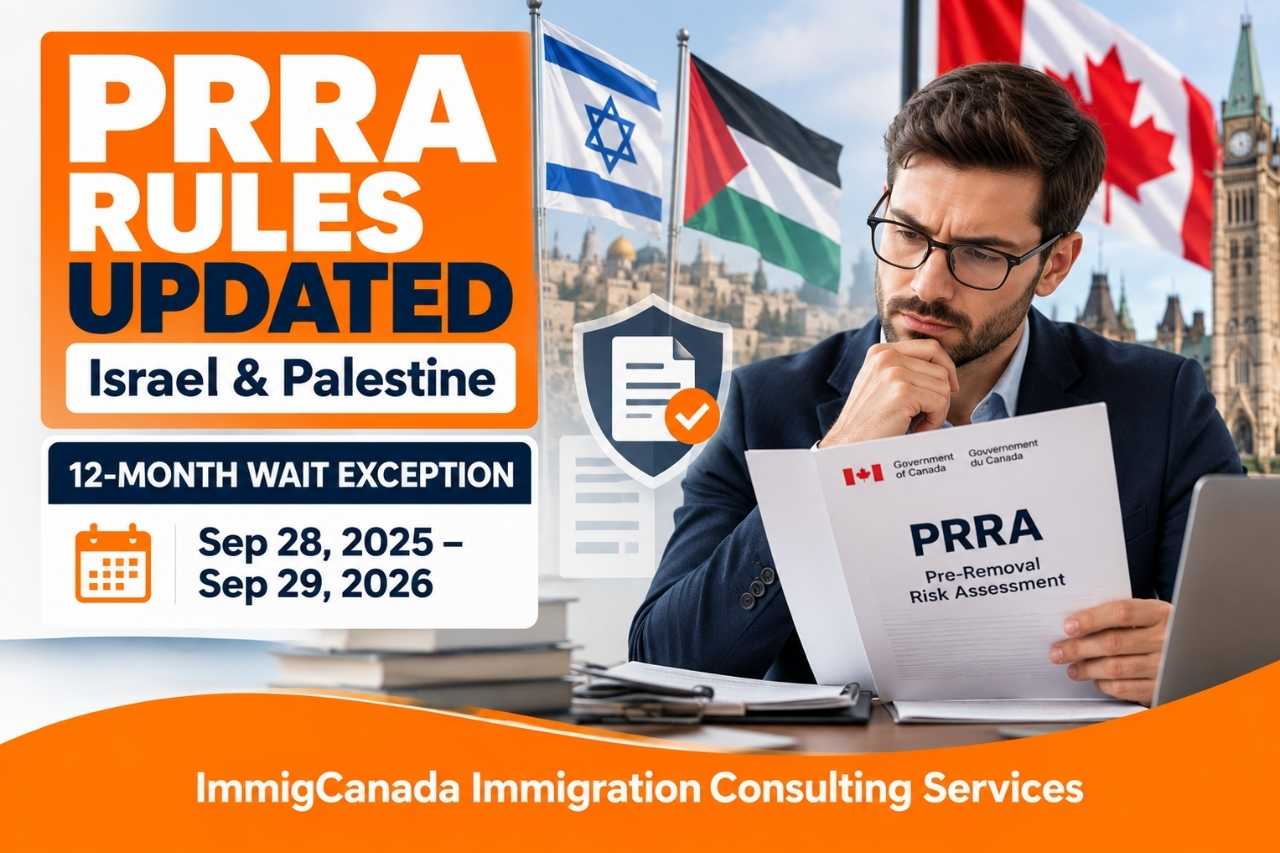

Canada has introduced a temporary change affecting eligibility for a Pre-Removal Risk Assessment (PRRA) for certain nationals and former residents of Israel and Palestine.
The Immigration, Refugees and Citizenship Canada (IRCC) update allows eligible individuals who received certain final negative decisions during a specified period to apply for a PRRA without waiting for the usual 12-month period.
This is an important update for people who may face a risk of persecution, torture or serious harm if removed from Canada.
What Is a Pre-Removal Risk Assessment?
A Pre-Removal Risk Assessment is a protection process that can assess whether a person would face certain risks if they were removed from Canada.
IRCC explains that a PRRA can consider risks such as persecution, torture or serious harm.
Normally, an individual may have to wait 12 months after a negative protection decision before becoming eligible to apply for another risk assessment.
The new measure creates an exception for certain nationals and former residents of Israel and Palestine.
What Has IRCC Changed?
According to IRCC’s September 29, 2026 notice, nationals and former residents of Israel or Palestine may now be eligible to apply for a PRRA if, between September 28, 2025 and September 29, 2026, they received a final negative decision on:
- An asylum claim from the Immigration and Refugee Board of Canada
- A previous PRRA application
- A Federal Court decision related to their case
IRCC’s official notice confirms that this temporary measure lifts the normal 12-month waiting period for eligible individuals within the specified period.
Official Source: Changes to the pre-removal risk assessment for Israel and Palestine
Important: The Date Range Matters
The dates are critical.
The current IRCC notice specifies September 28, 2025 to September 29, 2026, inclusive.
This is different from the September 30, 2025 date stated in the original information provided for this article.
Applicants should therefore rely on the current IRCC wording when determining whether they may qualify.
Who May Benefit From the Exemption?
The measure can apply to nationals and former residents of Israel or Palestine whose qualifying negative decision falls within the specified period.
However, eligibility does not mean that the PRRA application will automatically succeed.
IRCC will continue to assess applications individually.
This distinction is particularly important in protection-related immigration matters. Being allowed to submit a PRRA application does not guarantee that a person will be allowed to remain in Canada.
What Happens to People With Decisions After September 29, 2026?
IRCC states that nationals and former residents of Israel or Palestine who receive a final negative decision after September 29, 2026 are not eligible to apply for a PRRA for 12 months under this specific exemption.
The reason is that current country conditions would have been considered during their asylum claim or PRRA process.
This means applicants should not assume that the exemption is a permanent change to the normal PRRA rules.
Why This Update Matters
The PRRA process is different from ordinary immigration pathways such as Express Entry, Provincial Nominee Programs or family sponsorship.
It is part of Canada’s refugee protection and removal framework.
For individuals affected by a negative protection decision, the timing of the decision can therefore have significant consequences.
The latest update provides a specific exception for people who fall within the stated eligibility period.
Does the Exemption Guarantee Protection?
No.
IRCC specifically states that eligibility to apply for a PRRA does not guarantee that an individual will be allowed to stay in Canada.
Applications are assessed based on the information and evidence provided.
Individuals must also keep their PRRA application up to date and inform IRCC of relevant changes.
Certain individuals may face additional restrictions, including people subject to removal orders for serious inadmissibility or people who were previously excluded from refugee protection.
What Should Affected Individuals Do?
People who believe they may qualify should review their case carefully, including:
- Their nationality or former residence
- The date of the relevant final negative decision
- The type of decision received
- Any previous PRRA application
- Any Federal Court decision connected to the case
- Their current removal status
- Any inadmissibility issues
- The evidence available regarding the risks they may face
Because PRRA matters can involve complex legal and procedural issues, affected individuals should obtain appropriate professional advice before taking action.
A Time-Sensitive Immigration Update
This change is a good example of why applicants should not rely on older immigration articles or general explanations of the PRRA process.
IRCC can introduce temporary public-policy measures or change program delivery instructions based on circumstances.
For protection-related matters, the exact date and type of decision can affect eligibility.
The current IRCC notice should therefore be reviewed before submitting or relying on an application.
Immigration Guidance for Complex Cases
As a Regulated Canadian Immigration Consultant (RCIC), I believe applicants dealing with immigration or protection-related decisions should look at the specific facts of their case rather than relying on general eligibility information.
A policy exemption may create an opportunity, but that opportunity still has to be assessed against the individual’s circumstances and the applicable IRCC requirements.
Through ImmigCanada, applicants can seek professional immigration guidance across a range of Canadian immigration matters.
Frequently Asked Questions
A Pre-Removal Risk Assessment is a process that can assess whether a person would face certain risks, including persecution, torture or serious harm, if removed from Canada.
The exemption applies to certain nationals and former residents of Israel and Palestine who received qualifying final negative decisions during the specified period.
The current IRCC notice specifies September 28, 2025 to September 29, 2026, inclusive.
No. Being eligible to apply for a PRRA does not guarantee a positive decision or permission to remain in Canada.
The specific exemption does not apply, and the standard 12-month bar may apply.
The IRCC notice refers to nationals and former residents of Israel or Palestine.
Yes. PRRA and removal matters can involve significant procedural and legal issues, so the individual’s complete circumstances should be reviewed.