


Prime Minister Mark Carney has signalled that Canada could eventually move toward a controlled increase in population growth, marking a potentially important shift after several years of tighter immigration policies.
The comments come shortly before the federal government is expected to release its next multi-year Immigration Levels Plan.
However, applicants should be careful about what the statement means.
Canada has not announced a new immigration target.
Instead, Carney has indicated that the government believes the immigration system is now under greater control and that the next question is when Canada should resume a controlled increase in population.
What Did Mark Carney Say?
In an interview with The New York Times, Carney said that Canada had taken measures to bring the immigration system under control.
He then indicated that the question was when Canada would resume some controlled increase in population.
The comments are significant because Canada’s recent immigration policy direction has focused heavily on reducing temporary resident arrivals and managing population growth.
However, the Prime Minister did not announce a specific new permanent resident target.
That distinction matters.
Until the next Immigration Levels Plan is released, applicants should continue to rely on the current official targets and program requirements.
Canada Has Been Reducing Temporary Resident Arrivals
Canada’s current immigration strategy includes measures designed to reduce the temporary resident population.
The 2026 to 2028 Immigration Levels Plan includes a government commitment to reduce the temporary population to less than five percent of Canada’s total population by the end of 2027.
The government has also reduced temporary resident arrival targets while stabilizing permanent resident admissions.
This means Canada’s recent immigration strategy has not been simply about reducing permanent residence.
It has involved managing the overall pace and composition of immigration.
What Are Canada’s Current Immigration Targets?
Under the current 2026 to 2028 Immigration Levels Plan, Canada has established targets for permanent resident admissions as well as new temporary resident arrivals.
The current plan is focused on sustainable immigration levels, economic immigration and reducing the temporary population.
The federal government has stated that permanent economic immigration represents a significant share of the plan and that immigration should continue to support labour-market needs.
The government is also working toward reducing temporary residents to less than five percent of the population by the end of 2027.
These targets remain relevant until the next levels plan changes them.
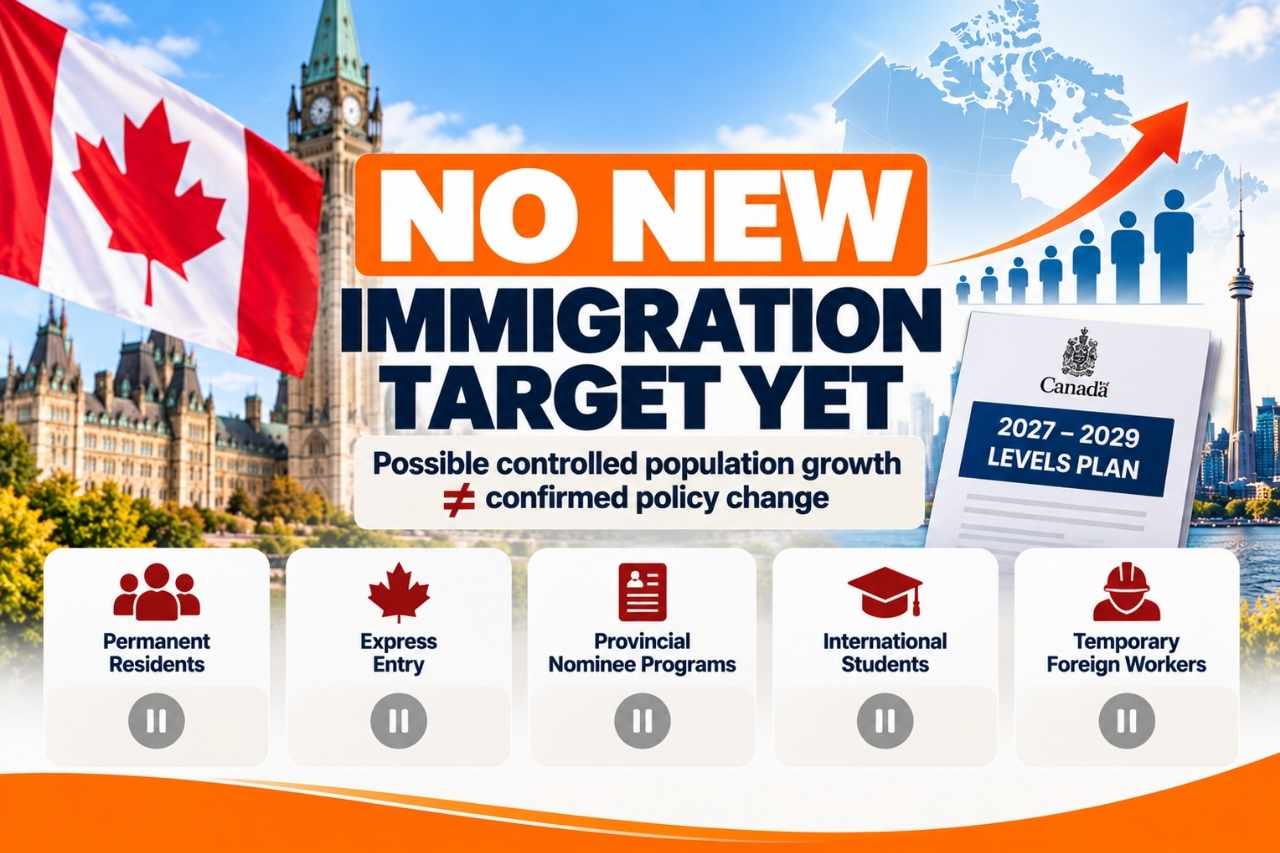
Does This Mean Canada Will Increase Immigration in 2027?
Not necessarily.
This is where applicants need to distinguish between a political signal and an actual immigration policy change.
Carney’s comments indicate that the government is considering when population growth can increase in a controlled manner.
They do not establish:
- A new permanent resident target
- A new Express Entry allocation
- A new Provincial Nominee Program allocation
- A new international student target
- A new temporary foreign worker target
- A new immigration program
Those details would need to come through formal government planning and program announcements.
Why the Next Immigration Levels Plan Matters
The next Immigration Levels Plan will be one of the most important immigration policy announcements for applicants and Canadian employers.
It can influence the overall number of permanent residents admitted and how immigration categories are managed.
It can also affect the broader policy environment for economic immigration, family reunification, temporary residents and regional immigration.
The government has indicated that immigration planning will continue to balance economic needs with pressures on housing, infrastructure and public services.
That balance will be important if Ottawa moves from a period of reductions toward controlled population growth.
Could This Be Good News for Economic Immigrants?
Potentially, but applicants should avoid assuming that higher overall immigration automatically means easier permanent residence.
Canada could increase population growth while still prioritizing specific occupations, regions or economic categories.
For example, future immigration planning could continue to emphasize:
- Health care
- Skilled trades
- Technology
- Construction
- Francophone immigration
- Rural and regional communities
- Workers already contributing to the Canadian economy
The exact priorities will depend on future government decisions.
This is why applicants should focus on where their profile fits within Canada’s immigration system, rather than simply waiting for a higher national immigration target.
What About Express Entry?
A future change in overall immigration levels could influence Express Entry over time, but applicants should not assume that a higher population target will automatically result in lower CRS cutoffs.
Express Entry invitations depend on the type and frequency of rounds, the number of invitations issued, category priorities and the candidates in the pool.
Category-based selection can also target specific occupations or language profiles regardless of the overall immigration direction.
This means applicants should continue monitoring Express Entry draws and eligibility requirements rather than waiting for a possible future increase.
What About Provincial Nominee Programs?
Provincial Nominee Programs could also be affected by future immigration planning because provincial nomination allocations form part of Canada’s broader permanent residence system.
However, provincial programs have their own selection criteria.
A province may prioritize particular occupations, employers, communities or economic sectors even if federal immigration levels increase.
For applicants, this reinforces the importance of looking at both federal and provincial pathways.
Canada’s Immigration Direction May Be Entering a New Phase
The most interesting part of Carney’s comments is the change in tone.
For several years, Canada’s immigration policy discussion has focused on reducing temporary resident numbers, slowing population growth and addressing pressures on housing and public services.
The latest comments suggest the government may eventually move from a correction phase toward a more controlled growth model.
That does not mean a return to previous immigration levels.
It also does not mean that all immigration programs will become easier.
Instead, Canada may be moving toward a model where immigration growth is more closely connected to economic capacity, housing, infrastructure and labour-market needs.
What Applicants Should Do Now
Applicants should not make major immigration decisions based solely on the Prime Minister’s comments.
Instead:
- Review the immigration pathways you may currently qualify for.
- Check current Express Entry eligibility and CRS factors.
- Review relevant Provincial Nominee Programs.
- Maintain valid language test results and educational documents.
- Monitor official IRCC announcements.
- Watch for the next Immigration Levels Plan.
- Avoid assuming that future targets will automatically mean lower CRS cutoffs.
The most important development to watch is the formal government plan, not speculation about what a future target might look like.
What This Could Mean for Canada’s Immigration Strategy
Carney’s comments could signal that Canada is approaching a transition point.
The country has spent the past several years reducing temporary resident arrivals and slowing population growth. The government now appears to be considering when a controlled increase could be appropriate.
The next step will be the details.
If Canada increases immigration, the key questions will be how much, through which programs, for which categories and with what regional or economic priorities.
For prospective immigrants, those details will matter far more than the headline announcement.
FAQs
No. The Prime Minister signalled that Canada may eventually pursue a controlled increase in population growth, but no new immigration target was announced
The phrase indicates a possible future increase in population growth while maintaining tighter management of immigration. The exact meaning will depend on future government policy and immigration levels.
The next plan is expected to set immigration targets for the coming years. The government is required by law to table its annual immigration levels plan around the November deadline.
That has not been confirmed. Applicants should wait for the official Immigration Levels Plan before assuming that permanent resident targets will increase.
Not necessarily. CRS cutoffs depend on the type of draw, invitations issued, candidate pool and selection category.
Potentially, but future allocations have not been confirmed. Applicants should continue to monitor individual provincial announcements.
Not necessarily. If you already qualify for an available immigration pathway, waiting for a possible future change may not be beneficial. Each profile should be assessed based on current eligibility and circumstances.
The next Immigration Levels Plan, Express Entry rounds, Provincial Nominee Program updates, temporary resident policies and changes to category-based selection are all important.