

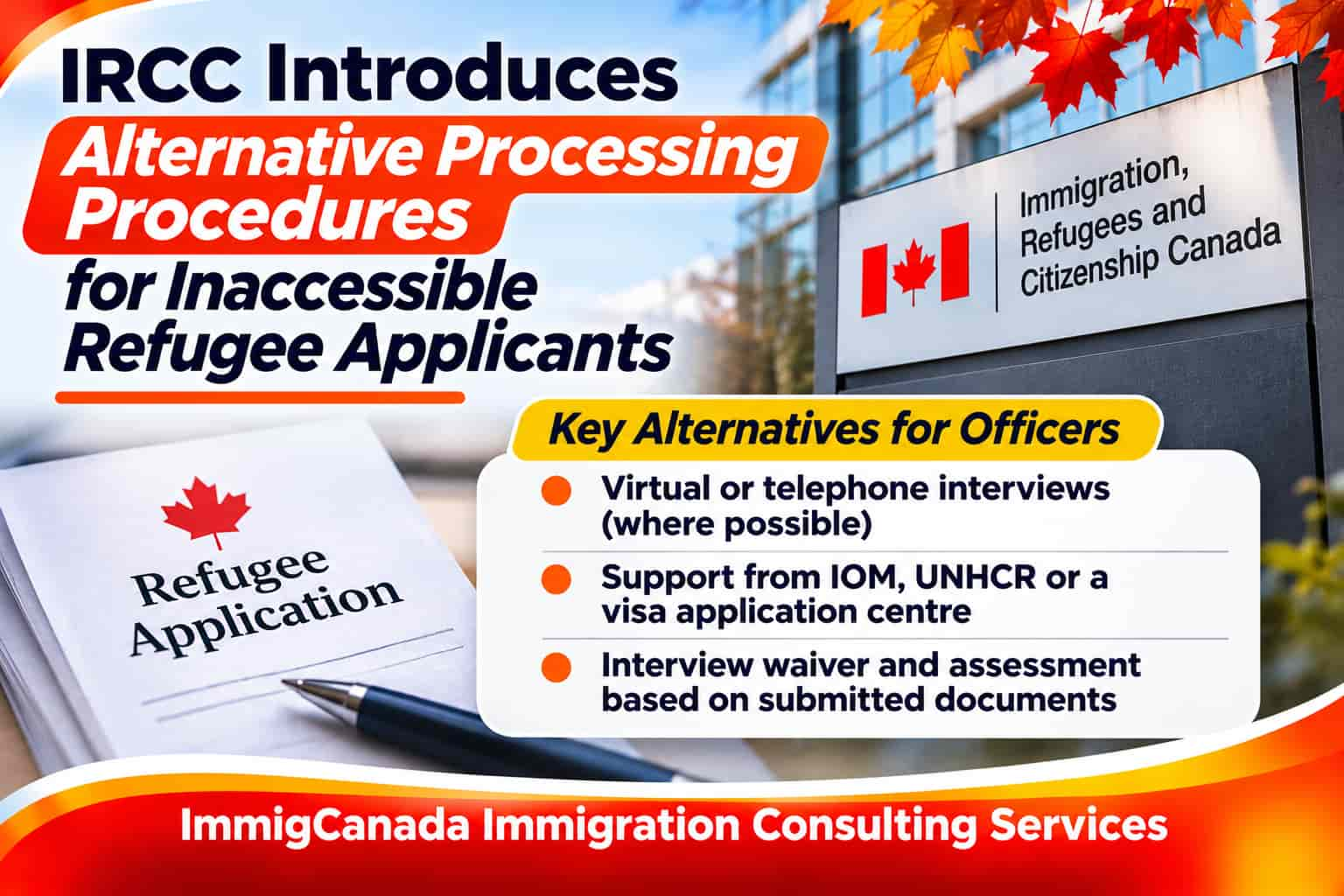

On November 16, 2026, Immigration, Refugees and Citizenship Canada (IRCC) introduced new operational guidance for refugee applicants living in locations where standard immigration processing is not possible. The change is particularly relevant to refugees living in regions affected by security restrictions, diplomatic limitations, detention or temporary disruptions to essential services. It also covers situations where IRCC officers cannot travel to an applicant’s location.
What alternative procedures can IRCC officers consider?
Under the updated guidance, officers are expected to consider reasonable alternatives before concluding that an application cannot proceed.
For example, where an in-person refugee interview is not possible, officers may consider conducting a virtual or telephone interview, provided local conditions allow it. They may also explore assistance from the International Organization for Migration (IOM), the United Nations High Commissioner for Refugees (UNHCR) or a visa application centre.
If remote interviewing is not feasible, officers may consider waiving the interview and assessing the application through the documents already submitted. Written questions may also be sent to applicants when additional information is required.
However, an interview waiver is not automatic. The guidance identifies circumstances such as the absence of serious credibility concerns, urgent protection needs and sufficiently complete documentation as relevant considerations.
Source: Program delivery update: Resettlement: Operationally Inaccessible Applicants
Biometrics and medical examination flexibility
The updated instructions also address two important requirements in overseas refugee resettlement: biometrics and immigration medical examinations.
Where an applicant cannot provide biometrics because of exceptional circumstances, a delegated officer may consider a case-by-case exemption under the applicable immigration regulations. Applicants granted this exemption will still be required to provide their fingerprints and photograph at a Canadian port of entry before being admitted as permanent residents.
Medical examinations may also receive an alternative arrangement. If an immigration medical examination cannot be completed or finalized within a reasonable period, an officer may consider issuing a Temporary Resident Permit (TRP), allowing the applicant to travel to Canada and complete the examination after arrival. The officer is expected to consult the Migration Program Manager before considering this option.
Could an inaccessible refugee application still be refused?
Yes. The updated guidance does not eliminate the possibility of refusal.
If none of the available alternatives can resolve the processing difficulties, an officer may place the refugee application on hold. IRCC recommends an average hold period of approximately six months, although the actual duration may be shorter or longer depending on the circumstances.
Before refusing an application, officers must consider and exhaust reasonable alternatives. The process also involves contacting the applicant or sponsor for updated information and, where concerns remain, issuing a procedural fairness letter. This gives the applicant an opportunity to respond and address the accessibility issue.
A refusal is therefore not intended to be an automatic consequence of living in a location where immigration services are unavailable.
Importantly, applicants whose circumstances change after a refusal may request that IRCC reopen their applications. For example, an applicant who moves to a country with accessible biometric and medical facilities may provide supporting evidence and request reconsideration. Reopening remains subject to an officer’s case-by-case assessment.
Frequently Asked Questions
An operationally inaccessible applicant is someone whose refugee resettlement application cannot be processed through the usual procedures because of circumstances in their location. This may include the absence of an IRCC office, restrictions on officer travel, or the unavailability of biometric or medical examination facilities.
Yes. Under the updated guidance, IRCC officers may consider conducting interviews remotely, including by video or telephone. If a remote interview is not feasible, officers may consider other options, such as a dossier-based assessment, depending on the circumstances of the case.
IRCC officers may consider waiving biometric requirements on a case-by-case basis where collection is operationally impossible. However, this is a discretionary decision, not an automatic exemption. Where applicable, biometrics may be collected when the applicant arrives at a Canadian port of entry.
In certain circumstances, IRCC may consider issuing a Temporary Resident Permit to allow an applicant to travel to Canada and complete the required medical examination there. This option depends on the individual case and is not guaranteed.
IRCC guidance identifies six months as a recommended average period for holding an application when reasonable processing alternatives are unavailable. The actual period may be shorter or longer depending on the circumstances.
A refusal should not be treated as automatic. Officers are instructed to consider reasonable alternatives before refusing an application. Depending on the circumstances, they may request updated contact information and provide an opportunity for the applicant to respond before making a final decision.
Yes. IRCC may consider reopening an application on a case-by-case basis if the operational obstacle changes and the applicant provides relevant evidence. Reopening is not guaranteed.
This update is significant for refugee applicants and Canadian sponsors who have been waiting for overseas resettlement applications to progress despite circumstances beyond their control. The new procedures provide officers with additional flexibility while maintaining the need for proper eligibility, identity and admissibility assessments.
Applicants and sponsors should keep contact details current, respond promptly to IRCC correspondence and retain evidence showing when processing barriers change. Visit ImmigCanada to seek guidance and expert advice.