

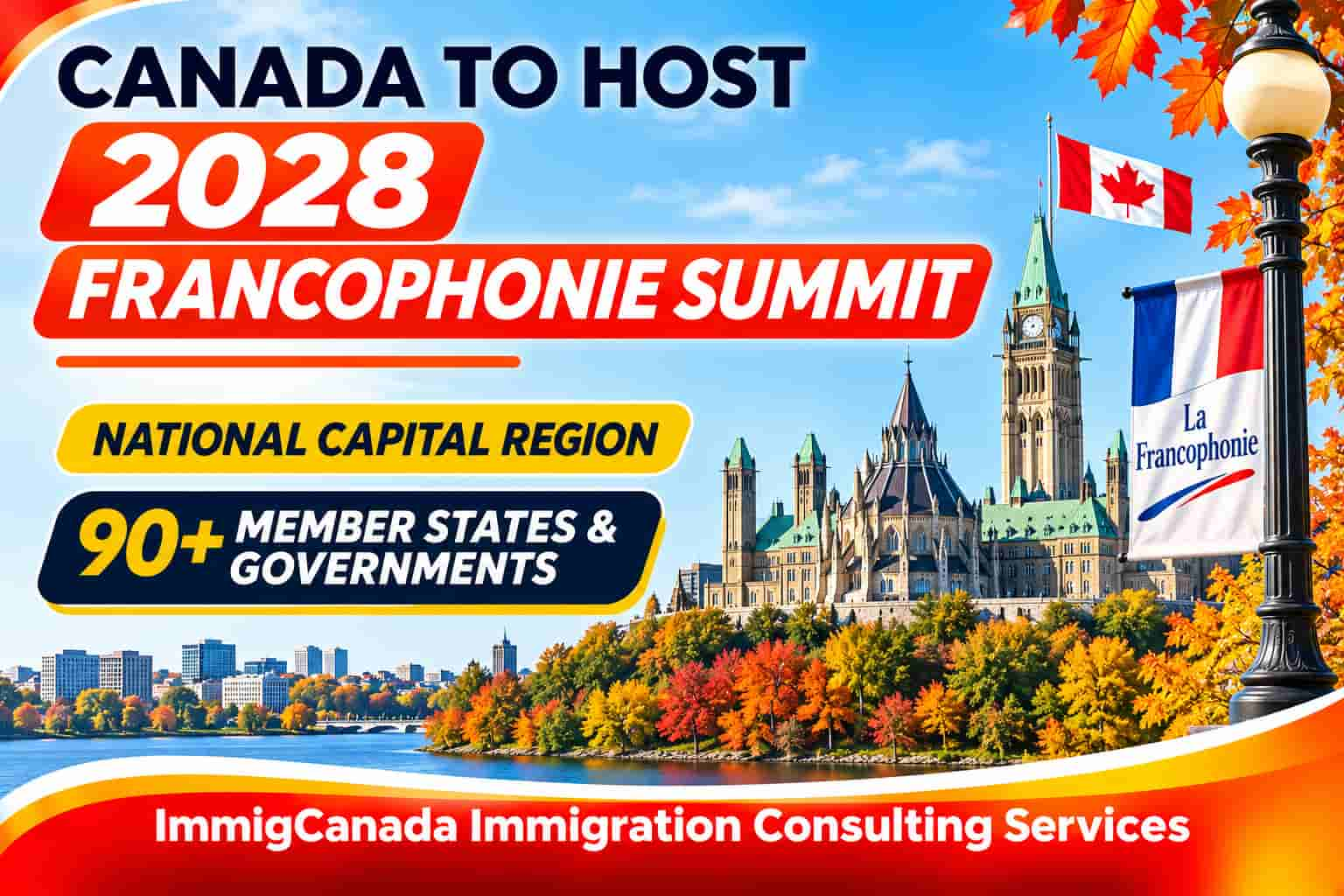

Canada has officially been designated as the host country for the 2028 Sommet de la Francophonie, with the National Capital Region set to welcome delegates from more than 90 member states and governments.
The announcement was made by Prime Minister Mark Carney on November 16, 2026, during the 20th Francophonie Summit in Phnom Penh, Cambodia. Canada’s hosting role will provide an opportunity to strengthen international partnerships, promote French language and culture, and expand educational, scientific and economic cooperation with Francophone countries.
The upcoming summit also aligns with Canada’s broader efforts to strengthen Francophone communities and increase French-speaking permanent resident admissions outside Quebec.
Canada strengthens its international Francophone partnerships
As part of the announcement, the federal government reaffirmed more than $23 million in investments over four years for the Organisation internationale de la Francophonie (OIF) and the Agence universitaire de la Francophonie (AUF).
The funding is intended to support French language promotion, cultural and linguistic diversity, scientific cooperation and educational partnerships.
Manitoba has also been welcomed as an observer government of the OIF, joining other Canadian provinces with established participation in the organization.
Another important development is the planned Francophonie youth pre-summit in Moncton, New Brunswick, in August 2028. It will bring together young people from Canada and other Francophonie member countries to exchange ideas, discuss shared priorities and engage with international leaders.
Source: Canada officially designated as host of the 2028 Sommet de la Francophonie
What does this mean for French speaking immigration to Canada?
The summit carries particular significance for people considering immigration through French-language pathways.
Under Canada’s 2026–2028 Immigration Levels Plan, the federal government set targets for French-speaking permanent resident admissions outside Quebec at:
- 2026: 9%
- 2027: 9.5%
- 2028: 10.5%
The subsequent 2027–2029 planning framework also sets a 10.5% target for 2028 and a 12% target for 2029.
These targets reflect Canada’s ongoing efforts to attract French-speaking newcomers and strengthen Francophone minority communities across the country.
French proficiency can also be relevant to economic immigration. Express Entry includes French-language category-based selection, while French-language ability may contribute additional points under the Comprehensive Ranking System, depending on the candidate’s qualifications.
For applicants who speak both English and French, developing strong language test results can therefore be an important part of a Canadian immigration strategy.
However, hosting the Francophonie Summit does not itself create a new immigration program or guarantee invitations to French-speaking candidates. Applicants must continue to meet the eligibility requirements of the relevant immigration pathway.
Canada’s preparations for the 2028 Francophonie Summit demonstrate that French-language immigration is connected to broader national priorities, including regional development, education, cultural exchange and international economic cooperation. For French-speaking professionals and students, opportunities may extend beyond Quebec to Francophone communities across Canada.
Frequently Asked Questions
Canada’s National Capital Region will host the 2028 Sommet de la Francophonie. The event will bring together representatives from more than 90 member states and governments of the Organisation internationale de la Francophonie (OIF).
Canada last hosted the Francophonie Summit in 2008 in Quebec City. The 2028 event will therefore mark the country’s return as host after two decades.
The summit brings together French-speaking countries and governments to discuss shared priorities, including international cooperation, education, culture, economic development, language and linguistic diversity.
Hosting the summit reinforces Canada’s commitment to the French language and Francophone communities. It also complements the country’s broader efforts to attract French-speaking immigrants and strengthen Francophone communities outside Quebec.
Yes. French-speaking candidates can explore several immigration pathways outside Quebec, including Express Entry and relevant provincial immigration programs. Eligibility depends on the specific program and the applicant’s qualifications.
French proficiency can improve an applicant’s immigration prospects. Under Express Entry, eligible candidates may benefit from additional CRS points for French-language ability and may qualify for category-based selection rounds for French-speaking candidates. However, meeting the applicable requirements does not guarantee an Invitation to Apply.
Under the federal targets announced for 2026–2028, Canada aims for French-speaking permanent resident admissions outside Quebec to represent 9% in 2026, 9.5% in 2027 and 10.5% in 2028.
No. Hosting the summit does not itself establish a new immigration program or provide automatic permanent residence eligibility. Applicants must continue to qualify through existing federal or provincial immigration pathways.
Moncton, New Brunswick, is scheduled to host the youth pre-summit in August 2028.
Get professional guidance from RCIC Eivy Joy Quito, a Regulated Canadian Immigration Consultant and make informed decisions. Connect with ImmigCanada today to explore your Canadian immigration opportunities and take the next step towards your future in Canada.