

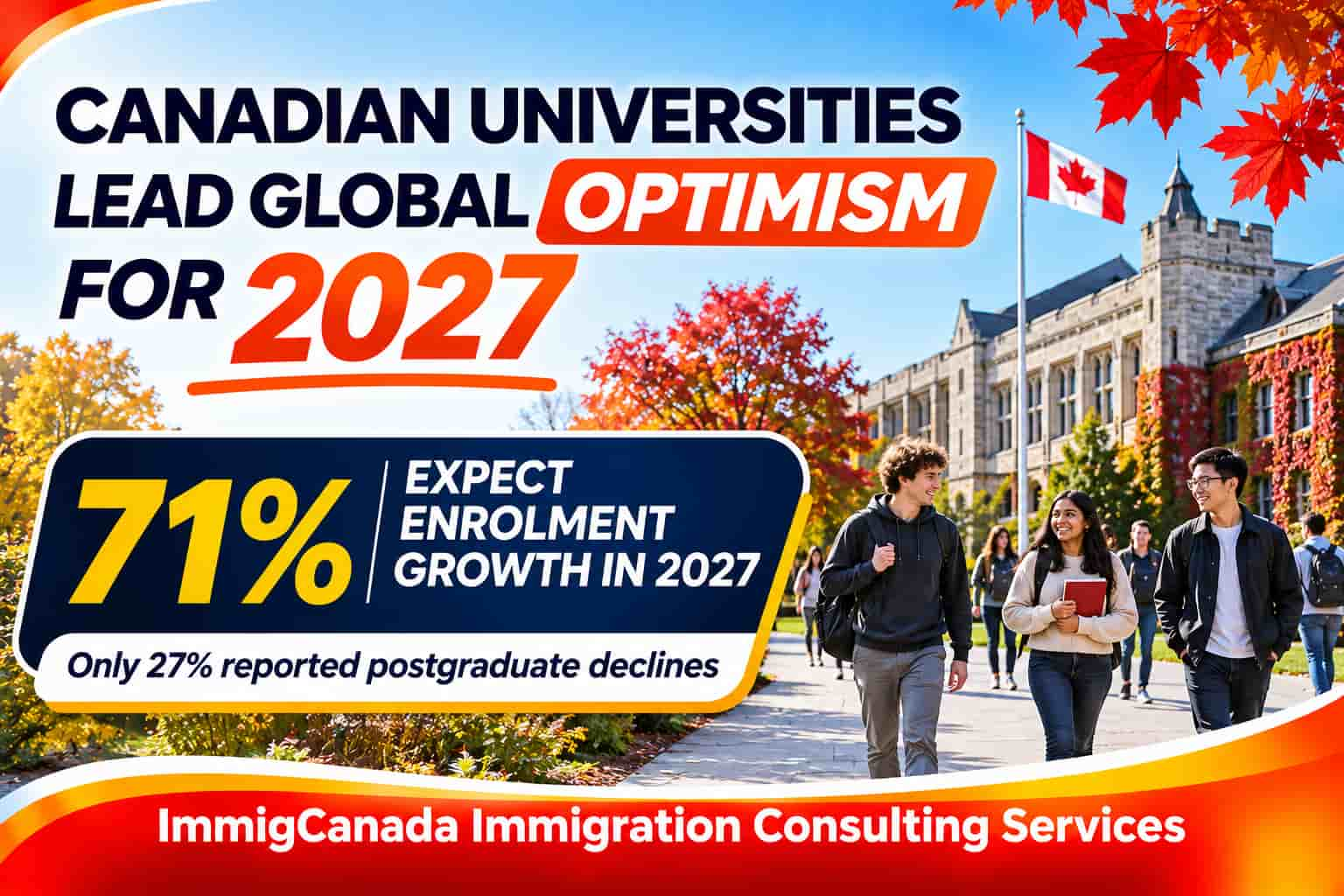

Canadian universities are feeling more confident. A new Global Enrolment Benchmark Survey, by Studyportals, NAFSA and Oxford Test of English, shows stronger international student numbers in fall 2026. Canadian institutions also report the highest optimism worldwide for growth in 2027. The contrast with other major destinations is clear. In the survey, 79% of UK institutions and 59% of U.S. institutions reported lower postgraduate numbers. Only 27% of Canadian universities saw declines in master’s and PhD programs.
The survey links that stronger result to federal cap exemptions for graduate students. Earlier this year, new study permits for master’s and PhD students doubled in the second quarter of 2026, and graduate students made up 20% of all new study permits between January and August. Undergraduate results also improved. About 43% of Canadian schools reported gains, up from 6% the previous year. That is a big swing.
The Policy Challenge
Not everything is rosy. A strong 92% of Canadian respondents named government policies as their main recruitment barrier. Schools still face a changed environment, with caps on study permits and a tighter rule set than before.
Even so, 71% expect international enrolment growth in fall 2027. That optimism is the highest among the countries surveyed.
Source: Global survey tracks universities’ foreign enrolment for 2026 and outlook for 2027
Why Optimism Is Rising
Several factors may explain it. Clearer federal rules and stable targets through 2029 help schools plan. The 2027 to 2029 Immigration Levels Plan keeps new temporary arrivals at 370,000 a year, including up to 150,000 international students. Education groups welcomed that stability.
Canada’s reputation also helps. Students value safety, quality education, multicultural cities and clear post-study pathways. In a period when some other countries have tightened rules or faced uncertainty, Canada offers a stable and welcoming alternative.
Imagine a master’s applicant from Vietnam comparing programs in the UK, the U.S. and Canada. She worries about changing rules and costs. She notices that Canadian universities report stronger enrolments for graduate students and that federal policy offers clearer targets. She also likes the idea of Canadian work experience after graduation. She applies to a Canadian university. This is an illustrative scenario.
Why It Matters
International students bring more than tuition. They enrich classrooms, support research, fill part time jobs and join communities. Many go on to fill skilled jobs after graduation. Strong enrolment helps universities keep programs open, staff employed and campuses vibrant.
For the broader economy, graduates with Canadian education and experience are well placed to meet labour needs.
Optimism is not a guarantee. Students must still meet all requirements and understand the current rules. Study permit caps and provincial attestation requirements may apply, so check official instructions carefully before applying.
If you plan to study in Canada in 2027, start early. Compare programs by quality, cost, location and career outcomes. Research scholarships and funding. Prepare transcripts, language test results and proof of funds. Apply well before deadlines. Graduate applicants should contact potential supervisors early and understand funding offers.
Think about your plan after graduation. Work options and permanent residence pathways exist, but rules change. Verify current requirements before committing.
Be cautious of agents who promise guaranteed admission or permits. Use only authorized representatives and official sources. For schools, the message is encouraging but cautious. Stay flexible, invest in student services and keep an eye on policy changes.
Expect more data on 2027 applications and permits. The government may continue to adjust rules for different groups, including graduate students and college programs. We will track developments.
Frequently Asked Questions
Canadian universities recorded stronger fall 2026 international numbers and reported the highest global optimism for 2027 growth.
Only 27% of Canadian universities saw declines, versus 79% of UK and 59% of U.S. institutions.
43%, up from 6% last year.
92% of Canadian respondents cited government policies. Even so, 71% expect growth in fall 2027.
Want to stay ahead of every change? Follow ImmigCanada for the latest Canada immigration news, official updates and expert insights. Bookmark ImmigCanada, subscribe to our updates and check back often. Your Canadian journey deserves reliable information.