

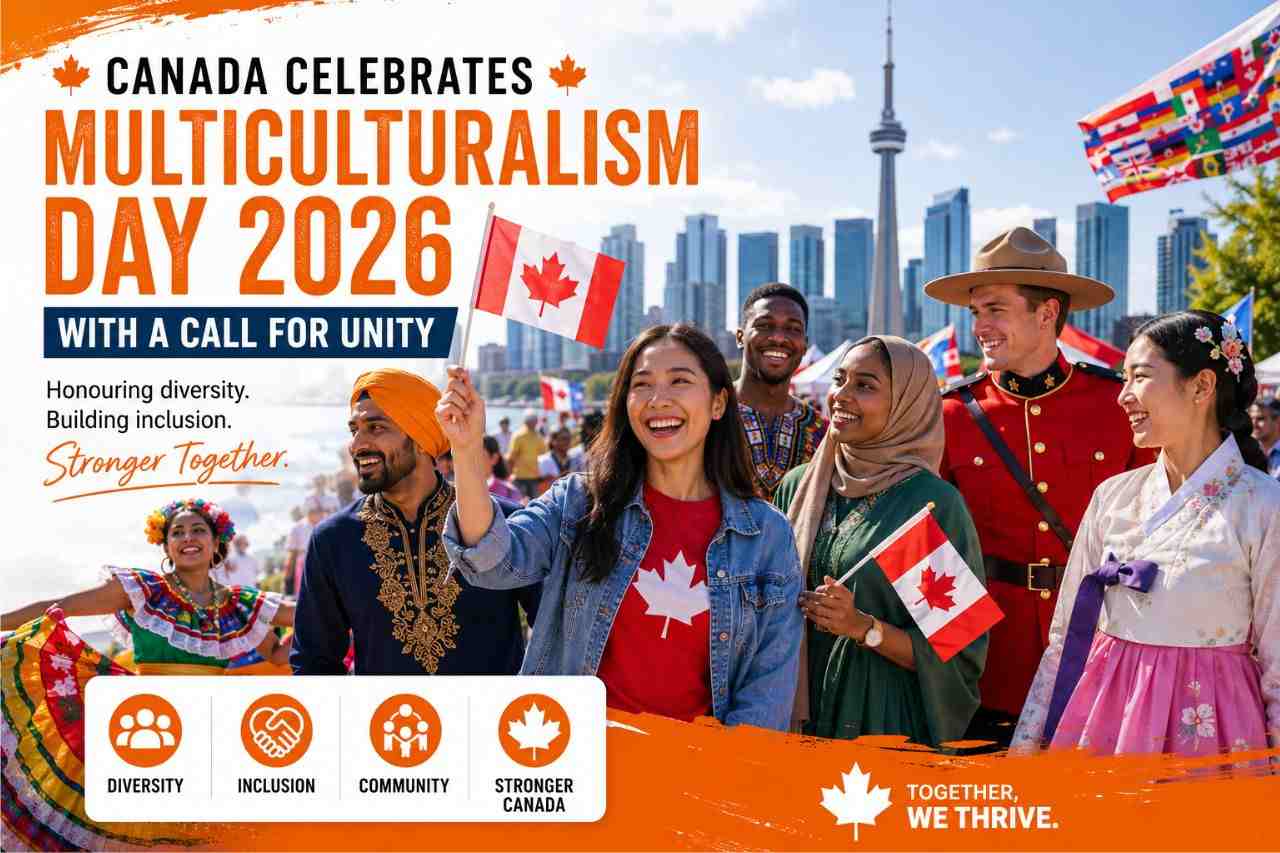

Canadian Multiculturalism Day, marked every June, celebrates the idea that Canadian unity does not require sameness. Prime Minister Mark Carney’s 2026 statement reaffirmed that the country’s differences are a strength protected by the Canadian Charter of Rights and Freedoms, and that building an inclusive Canada is an ongoing, generational project newcomers are part of.
Why Does Canada Set Aside A Day For Multiculturalism?
More than two decades ago, Canada formally established Multiculturalism Day, and it was not placed on the calendar by accident. It sits in the run-up to Canada Day, alongside National Indigenous Peoples Day and Saint-Jean-Baptiste Day. Together, the three days form a deliberate sequence, one that acknowledges Indigenous nations, French Canadian heritage, and the waves of newcomers who have shaped the country, all within the same short stretch of the calendar.
For newcomers and prospective immigrants, this sequencing matters more than it might first appear. It signals that Canadian identity was never built around a single founding story. It was built, and continues to be built, by many communities contributing in parallel.
What Did Prime Minister Carney Say About Canadian Unity
In his 2026 statement, Prime Minister Mark Carney made a point that resonates strongly with the immigration community: unity does not require uniformity. He framed Canada’s pluralism not as a happy accident but as a series of deliberate, sometimes imperfect choices made across generations. Over time, those pragmatic decisions hardened into a conviction that differences are a source of national strength, not a risk to be managed.
That conviction is not just rhetorical. It is written into the Canadian Charter of Rights and Freedoms, which protects multiculturalism as a constitutional value rather than a passing policy trend. Carney’s statement closed with a call to keep widening the circle, building a country that is bilingual, multicultural, and actively working through reconciliation with Indigenous peoples.
Why Should This Matter To Someone Considering Immigration To Canada?
If you are weighing a move to Canada, government statements about values can feel abstract next to your spreadsheet of CRS scores and provincial nomination deadlines. But this one is worth pausing on, because it shapes the environment you would actually be moving into.
Canada’s multiculturalism framework is not limited to one ceremonial day. It influences settlement services, workplace accommodation standards, school curricula, and the public funding behind community organizations that help newcomers integrate. Immigrants are not expected to set aside their language, religion, or cultural practices to participate fully in Canadian life. That expectation gap, present in many countries, is comparatively narrow here.
How Does Multiculturalism Policy Connect To Practical Immigration Pathways
Multiculturalism is not a separate track from economic immigration. It runs underneath programs like Express Entry, the Provincial Nominee Program, and family sponsorship, shaping how welcoming a province feels once you arrive, not just whether you qualify on paper. Provinces actively competing for skilled newcomers, including Ontario through its recently redesigned nominee program, understand that retention depends on whether immigrants feel they belong, not only on whether they were approved.
That is part of why ImmigCanada encourages clients to think beyond eligibility scores. We ask where you want to build a life, not just where you can get approved fastest, because those two answers are not always the same community.
Frequently Asked Questions
It falls in late June, positioned close to National Indigenous Peoples Day, Saint-Jean-Baptiste Day, and Canada Day.
It is enshrined in the Canadian Charter of Rights and Freedoms, giving it constitutional weight beyond symbolic recognition.
It does not directly affect CRS scores or eligibility criteria, but it shapes settlement support and community resources after you arrive.
Multiculturalism funding and programming extend well beyond major metros, including many provincial nominee program destination communities.
Through municipal newcomer centres, provincial settlement agencies, and community organizations, many of which ImmigCanada can connect clients to during onboarding.
Thinking about where in Canada your family could put down lasting roots, not just where you might qualify fastest? Book a consultation with ImmigCanada to discuss destination provinces, settlement support, and the immigration pathway that fits your goals.
Building Your Place in A Country Built On Difference
Canadian Multiculturalism Day is a reminder that the country newcomers are joining was never meant to ask them to disappear into a single mould. RCIC Eivy Joy Quito and the ImmigCanada team see this play out daily in client consultations, families who succeed in Canada are often the ones who choose a community where their culture, language, and goals are genuinely supported, not just tolerated.
If you are mapping out a Canadian immigration journey and want guidance that accounts for both eligibility and belonging, our consultants are ready to help you build a plan that fits your whole family, not just your application file.