

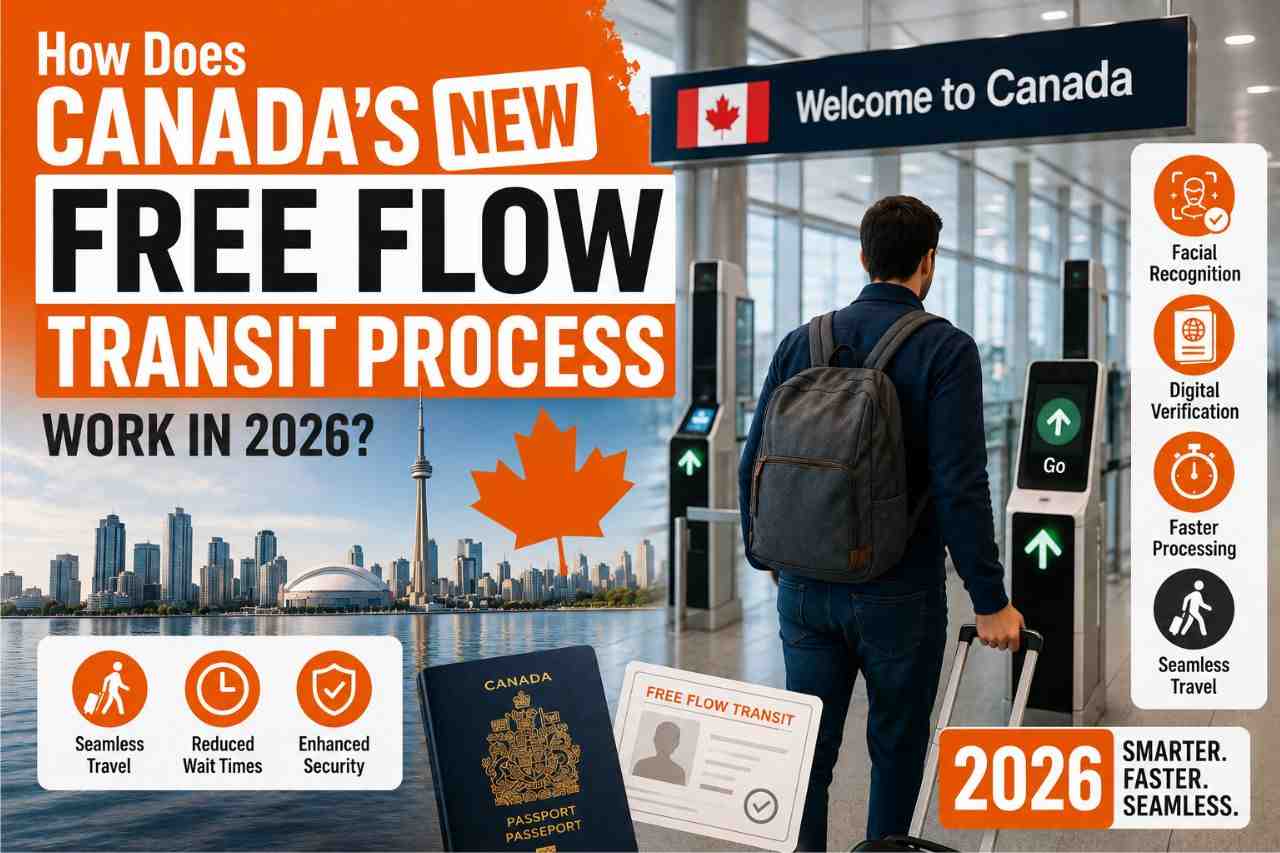

The Canada Border Services Agency launched Free Flow International-to-International Transit on June 26, 2026, letting eligible connecting travellers skip in-person customs check-ins at Toronto Pearson, Vancouver, and Montreal-Trudeau airports. Airlines share passenger data directly with CBSA, while travellers still need valid visas and a confirmed onward flight departing within 24 hours.
What Problem is Free Flow Transit Actually Solving?
Anyone who has sprinted through a Canadian airport terminal with a tight connection knows the friction this program targets. Previously, international travellers passing through Canada on their way to a third country had to clear a full customs check-in, even though they had no intention of entering Canada at all. That extra step ate up time, created bottlenecks at peak hours, and occasionally caused travellers to miss connections through no fault of their own.
The new Free Flow process removes that redundant checkpoint for qualifying travellers. Instead of standing in a kiosk line, passengers connecting between two international flights walk straight from arrival gate to departure gate.
Who Qualifies For Free Flow International-to-International Transit?
Eligibility comes down to itinerary and documentation, not nationality. You need a confirmed airline ticket for an international flight departing Canada within 24 hours of your arrival, plus any visa or Electronic Travel Authorization required for your final destination. Travellers still need a valid Temporary Resident Visa or eTA where applicable, the program does not waive those requirements, it simply removes the in-person customs stop for travellers who already meet them.
Source: Canada’s New Free Flow Transit Process
Airlines, not travellers, carry the administrative weight here. Carriers are required to collect and transmit passenger flight details, including final destination and scheduled departure time, directly to CBSA so the agency can confirm travellers actually leave the country as planned.
Which Canadian Airports Currently Offer This Process?
As of launch, three of Canada’s busiest international hubs participate:
- Toronto Pearson International Airport, Terminal 1
- Vancouver International Airport
- Montreal-Trudeau International Airport
Other airports can apply to adopt the same system by contacting CBSA directly, so the participating list is likely to grow as the program proves itself operationally.
Does This Affect Travellers Who Are Actually Entering Canada?
No. Free Flow Transit applies exclusively to passengers continuing on to another country. If your final destination is somewhere in Canada, or if you are arriving to begin a study permit, work permit, or permanent residence landing, you will go through the standard CBSA process exactly as before. This program narrows the border, it does not soften it.
CBSA has been explicit that this initiative supports its broader mandate of speeding up legitimate travel while concentrating screening resources on higher-risk movements. The touchless verification model lets officers focus attention where it matters most, rather than processing routine transit passengers who pose minimal risk.
Case Study: A Client Connecting Through Toronto En Route To A Permanent Residence Interview Abroad
One ImmigCanada client, a software engineer with a strong CRS-band profile moving through a multi-leg journey to attend a visa office appointment overseas, had a tight 70-minute connection through Toronto Pearson on an itinerary we reviewed during pre-travel planning. Under the prior process, that connection carried real risk of a missed flight. Travelling under Free Flow eligibility after the June 2026 rollout, our client cleared the terminal without a customs stop and made the connection with time to spare. Small operational changes like this one rarely make headlines, but they materially reduce stress for clients juggling international travel alongside immigration appointments and document deadlines.
What Should Travellers Bring To Avoid Delays Anyway
Even though the in-person check-in disappears, documentation requirements do not. Keep your passport, visa or eTA confirmation, and onward boarding pass easily accessible. Confirm your connection window genuinely falls within 24 hours of arrival, since that threshold determines eligibility. If your layover stretches beyond that window, standard transit and entry rules apply instead.
Frequently Asked Questions
1. When did Free Flow International-to-International Transit start?
The process became operational on June 26, 2026, following a public consultation period through the Canada Gazette.
2. Which airports support this process right now?
Toronto Pearson Terminal 1, Vancouver International Airport, and Montreal-Trudeau International Airport.
3. Do I still need a visa or eTA to use Free Flow Transit?
Yes. All standard visa, eTA, and travel document requirements for your final destination still apply.
4. Does this program apply if Canada is my final destination?
No. It only applies to travellers connecting onward to another international destination.
5. How does CBSA verify I actually left the country?
Airlines share your flight and departure details directly with CBSA, creating a touchless verification record.
6. Can other Canadian airports join this program later?
Yes. Additional airports may apply to CBSA to adopt the process, so the list of participating hubs may expand.
Planning international travel around an immigration appointment, landing date, or visa office interview? ImmigCanada can help you sequence your travel and documentation correctly. Book a consultation with our team before you book your flights.
Smoother Borders, Smarter Travel Planning
Operational changes like Free Flow Transit rarely make front-page news, but for immigration applicants juggling visa office appointments, landing dates, and family visits across continents, they genuinely matter. RCIC Eivy Joy Quito and the ImmigCanada team build these practical realities into every client’s travel and immigration plan, because a missed connection should never become a missed opportunity. Whether you are coordinating an upcoming permanent residence landing or simply transiting through Canada to see family, our consultants can help you understand exactly which border processes apply to your situation and how to prepare accordingly for a successful Canadian immigration journey.