

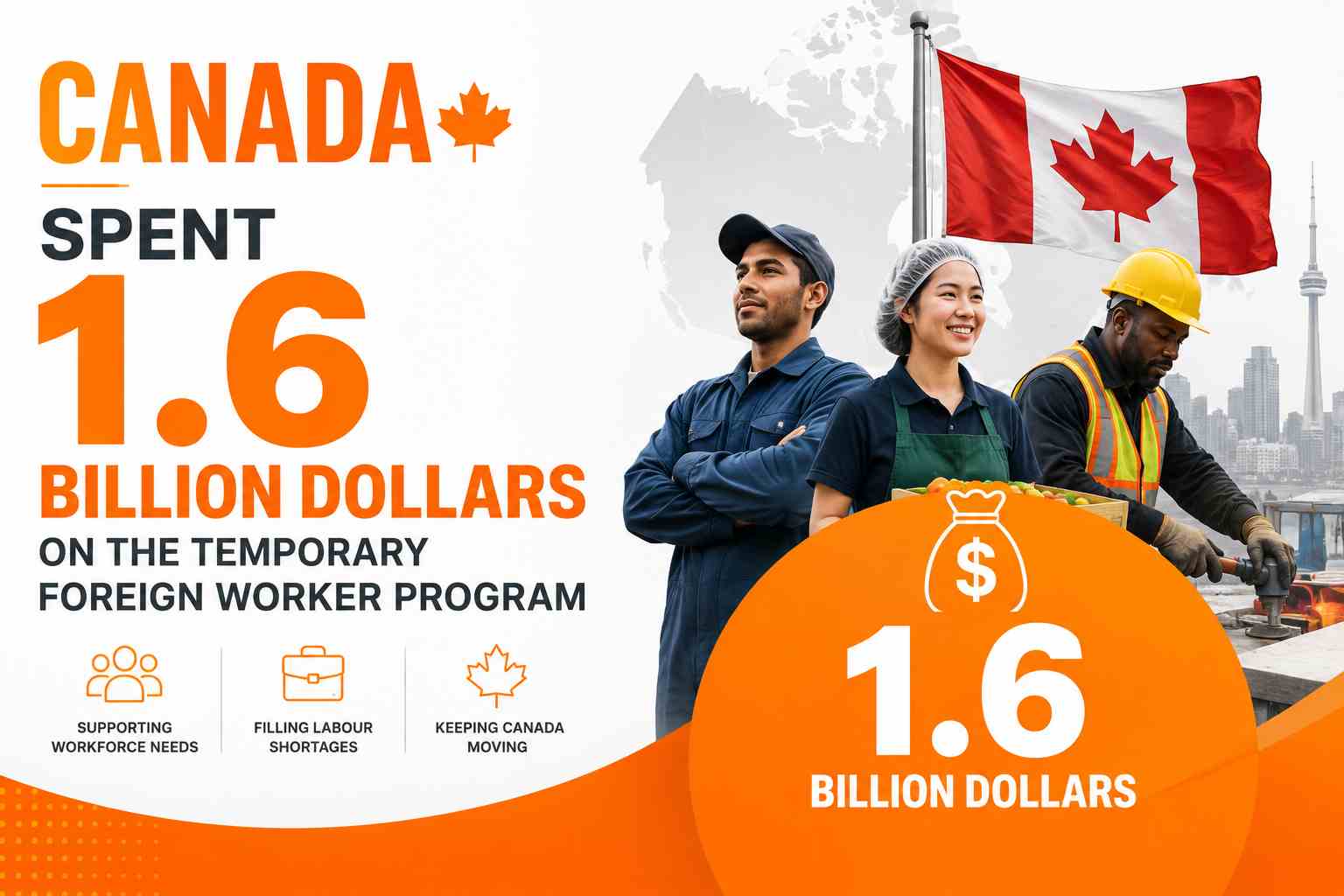

Not many government spending revelations spark this level of debate. But when new data surfaced showing that the federal government spent 1.6 billion dollars administering the Temporary Foreign Worker Program over the past five years, it reignited one of the most heated conversations in Canadian immigration policy. Shadow Minister Michelle Rempel Garner wasted no time calling for the program’s immediate elimination. So what exactly is the TFW program why is it under fire, and what could come next for Canada’s labour and immigration policy?
What the New Data Revealed
Data tabled in Parliament through an Order Paper Question revealed that the Liberal government spent 1.6 billion dollars running the program over five years, at a net cost of 509 million dollars to Canadian taxpayers. The figures reignited a long-standing debate about whether the program serves Canada’s economic interests or actually works against them.
The Temporary Foreign Worker Program, often called the TFW program, allows Canadian employers to hire foreign nationals temporarily when no qualified Canadian worker is available for the position. On paper, it sounds straightforward. In practice, critics argue that the program has grown far beyond its intended scope.
Why Critics Want the Temporary Foreign Worker Program Gone?
Shadow Minister Michelle Rempel Garner’s statement laid out a pointed critique of the program. She argued that by flooding the labour market with temporary foreign workers at levels the economy cannot absorb, the program suppresses wage growth, reduces productivity gains, and takes entry-level job opportunities away from Canadians, especially young people.
The argument is grounded in basic labour market logic. When employers have access to a large supply of temporary, lower-cost foreign labour, they have less financial pressure to raise wages, improve working conditions, or invest in training and upskilling Canadian workers. Why compete for Canadian talent when a government-backed pipeline of workers is available at a lower cost?
This dynamic, critics argue, has allowed Canadian businesses to avoid the kind of modernization and investment in productivity that would otherwise be necessary. Rather than adopting new technologies or more efficient practices, some employers have relied on a steady flow of temporary workers to keep costs low. The result, according to the Conservative position, is that Canada’s productivity has lagged relative to its peer nations.
The Human Cost of the Program
Beyond the economic arguments, there is a deeply human dimension to this debate. Reports from human rights organizations have documented cases of exploitation within the TFW Program, including wage theft, unsafe working conditions, and overcrowded housing. Because temporary foreign workers are often tied to a single employer, they can find themselves in vulnerable positions with limited options to speak up or leave.
Rempel Garner pointed to this reality in her statement, noting that creating structural economic reliance on temporary foreign labour has eroded something fundamental to Canada’s national identity: the idea that working hard in Canada should lead to a better life. For workers who have no clear pathway to permanent residency, that promise remains out of reach. They contribute to the Canadian economy but are not given the opportunity to fully become part of it.
Youth Unemployment and the Recession Context
The debate is taking place against a difficult economic backdrop. Canada is currently navigating an economic recession, and youth unemployment remains elevated. Critics of the TFW program argue that in this environment, every job filled by a foreign worker in an entry-level or low-skill role is a job that could have gone to a young Canadian looking to build a career.
This is not an argument against immigration broadly. Canada’s long-term prosperity depends on continued immigration, and ImmigCanada firmly believes in the importance of welcoming newcomers who want to build their futures here. The debate is specifically about whether the Temporary Foreign Worker Program, in its current form, is structured in a way that serves Canada’s workers and newcomers fairly.
What the Conservatives Are Proposing
The Conservative position, as articulated by Rempel Garner, is not simply to eliminate the program without replacement. The proposal is to abolish the TFW Program in its current broad form and replace it with a standalone program focused strictly on seasonal agricultural and fisheries positions. These are the roles that Canadians have historically been genuinely difficult to fill and where workers have served a clear and legitimate need.
Outside of those specific sectors, the Conservative position is that Canada should focus on recruiting, training, and retaining workers domestically. That means investing in apprenticeships, improving labour mobility between regions, and creating better pathways for Canadians, especially young people, to enter and advance in the workforce.
What This Means for Immigrants and Prospective Newcomers
If you are someone who has come to Canada through the Program or is considering it, this debate matters to you directly. Any significant changes to the program would affect the options available to workers and their prospects for permanent residency in Canada.
It is important to understand that the debate is not about whether immigrants are welcome in Canada. It is about which programs and pathways best serve both newcomers and Canadian society. Canada remains one of the most welcoming countries in the world for skilled immigrants, and there are many pathways to permanent residency beyond the TFW program.
At ImmigCanada, we closely follow policy developments like this so that you always have accurate and up-to-date information. Whether you are currently in Canada on a work permit or planning your immigration journey, knowing how these policy debates could affect your options is essential.
A Policy Crossroads for Canada
The Temporary Foreign Worker Program has been a fixture of Canadian immigration policy for decades. It has also been controversial for much of that time. The new spending data and the political debate it has ignited suggest that significant reform is on the horizon, one way or another.
What is clear is that Canada needs immigration programs that are fair to newcomers, beneficial to the economy, and honest about the labour market realities facing Canadian workers. Finding that balance is not easy, but it is essential for a country that takes both its openness to the world and its responsibility to its own people seriously.
ImmigCanada will continue to track this story and bring you the latest updates as policy discussions evolve. Stay informed, know your rights, and plan your immigration journey with accurate information.
Frequently Asked Questions
The TFW allows Canadian employers to hire foreign nationals on a temporary basis when qualified Canadian workers are not available for a position. It covers a wide range of occupations across many industries.
According to data tabled in Parliament, the federal government spent 1.6 billion dollars administering the program over five years, with a net cost of 509 million dollars to taxpayers.
Critics argue that the program suppresses wages, limits opportunities for Canadian workers and youth, enables employer exploitation of foreign workers, and reduces the incentive for businesses to invest in domestic training and productivity improvements.
The Conservative position is to replace the broad program with a smaller standalone program focused exclusively on seasonal agricultural and fisheries positions, which are genuinely difficult to fill with domestic workers.
While policy changes to the TFW program could affect one specific pathway, Canada has many other immigration streams available. ImmigCanada encourages prospective immigrants to explore all available options and stay informed about policy developments that may affect them.