

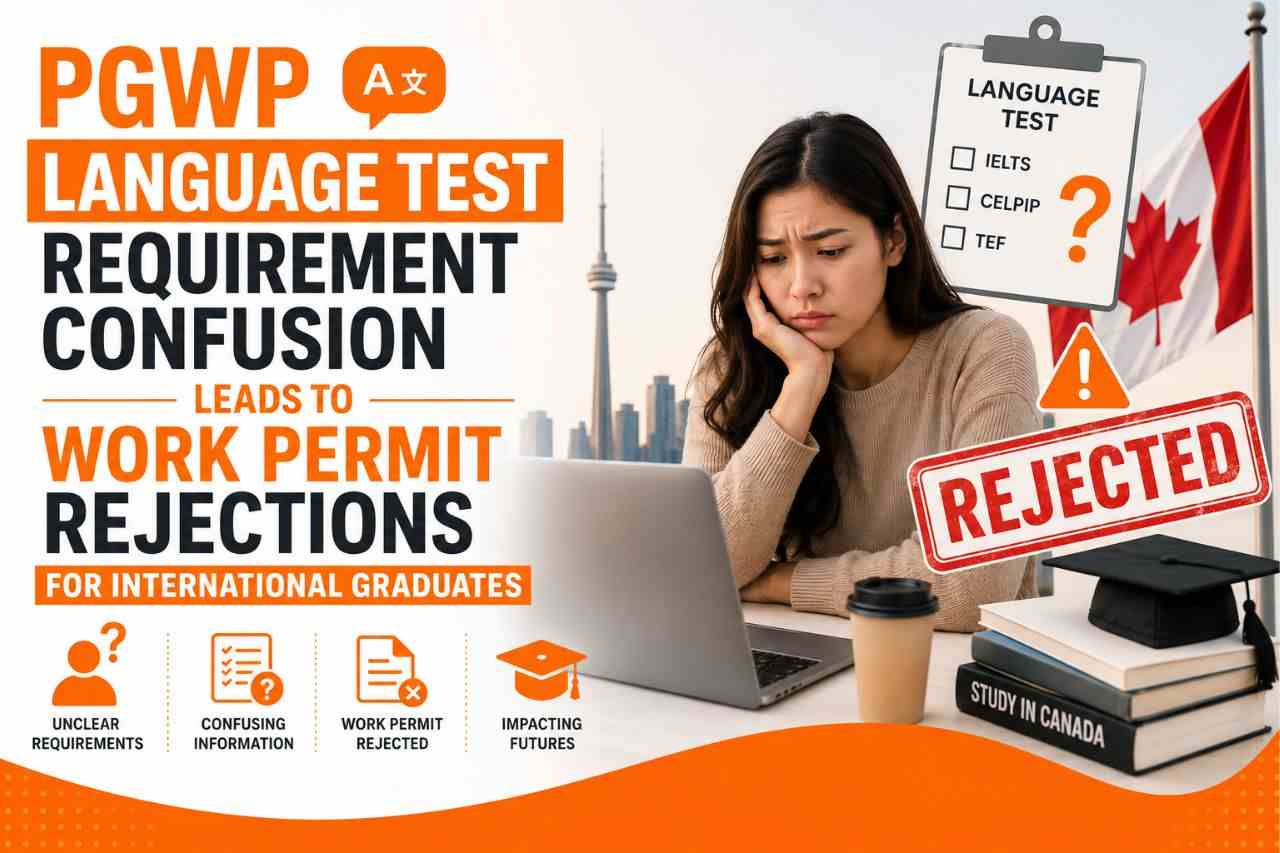

For many international students, obtaining a Post-Graduation Work Permit (PGWP) is the next crucial step after completing their studies in Canada. However, a growing number of graduates are reportedly facing PGWP application rejections because they were unaware of the mandatory PGWP language test requirement.
Recent reports suggest that important information about language testing remains difficult to locate on some federal immigration webpages. Many applicants complete the online questionnaire and receive document checklists that do not clearly highlight the requirement. As a result, otherwise eligible graduates may submit incomplete applications and face refusals.
The issue has raised concerns among students, immigration professionals, and educational institutions, especially as Canada continues to position itself as a top destination for international education.
Why Are PGWP Applications Being Refused?
The challenge appears to stem from how information is displayed on some government webpages.
According to reports, language testing details may be:
- Hidden within expandable sections
- Missing from automated document checklists
- Difficult to identify due to limited formatting
- Easy to overlook during self-submission
Many students rely heavily on the IRCC eligibility questionnaire and document checklist when preparing applications. If a required document is not clearly flagged, applicants may incorrectly assume their submission is complete.
Why the PGWP Matters
The Post-Graduation Work Permit Canada program allows eligible international graduates to gain valuable Canadian work experience after completing their studies.
A PGWP can help graduates:
- Work for almost any employer in Canada
- Gain Canadian work experience
- Improve Express Entry scores
- Qualify for Provincial Nominee Programs
- Build pathways toward permanent residence
Source: PGWP Language Test Requirement Update
Because the PGWP often serves as a bridge to immigration, application mistakes can have serious consequences.
IRCC Has Updated Some Information
Following concerns raised by applicants and stakeholders, Immigration, Refugees and Citizenship Canada (IRCC) has reportedly updated some webpages to improve clarity.
However, many immigration professionals continue to recommend that applicants carefully review all program requirements before submission rather than relying solely on automated checklists.
As immigration programs become more complex, self-applicants face increasing risks if they miss small but important eligibility criteria.
What International Students Should Do
If you plan to apply for a PGWP, consider the following:
- Verify Language Requirements: Always review the latest eligibility requirements directly on official government pages.
- Gather Documents Early: Prepare language test results and supporting documents before starting your application.
- Review Program Updates: Immigration policies can change frequently, particularly for temporary residents and graduates.
- Seek Professional Guidance: Working with a licensed immigration professional can help identify potential issues before submission.
How ImmigCanada Supports International Students
At ImmigCanada, we regularly assist international graduates with work permit and permanent residence applications.
Our licensed RCIC, Eivy Joy Quito (R512178), helps students understand changing immigration policies, verify eligibility requirements, and submit complete applications.
Students can also explore our more information on the following:
- Post-Graduation Work Permit
- Express Entry System
- Provincial Nominee Programs
- Canadian Experience Class
The growing number of refusals linked to the PGWP language test requirement highlights the importance of carefully reviewing immigration requirements before applying.
While IRCC has taken steps to improve website information, applicants should remain proactive and verify every requirement independently. Missing a single document can delay career plans and future immigration opportunities.
Frequently Asked Questions (FAQs)
Certain PGWP applicants may be required to submit approved language test results depending on the eligibility rules applicable to their program and application date.
Many refusals occur because applicants miss mandatory requirements, including language testing documentation, during the submission process.
Reports suggest some applicants did not see clear language test instructions in automated checklists, leading to incomplete submissions.
In some situations, applicants may be able to submit a new application if they remain eligible. Professional advice is recommended.
Carefully review all eligibility requirements, prepare supporting documents early, and consider professional guidance before submitting your application.