


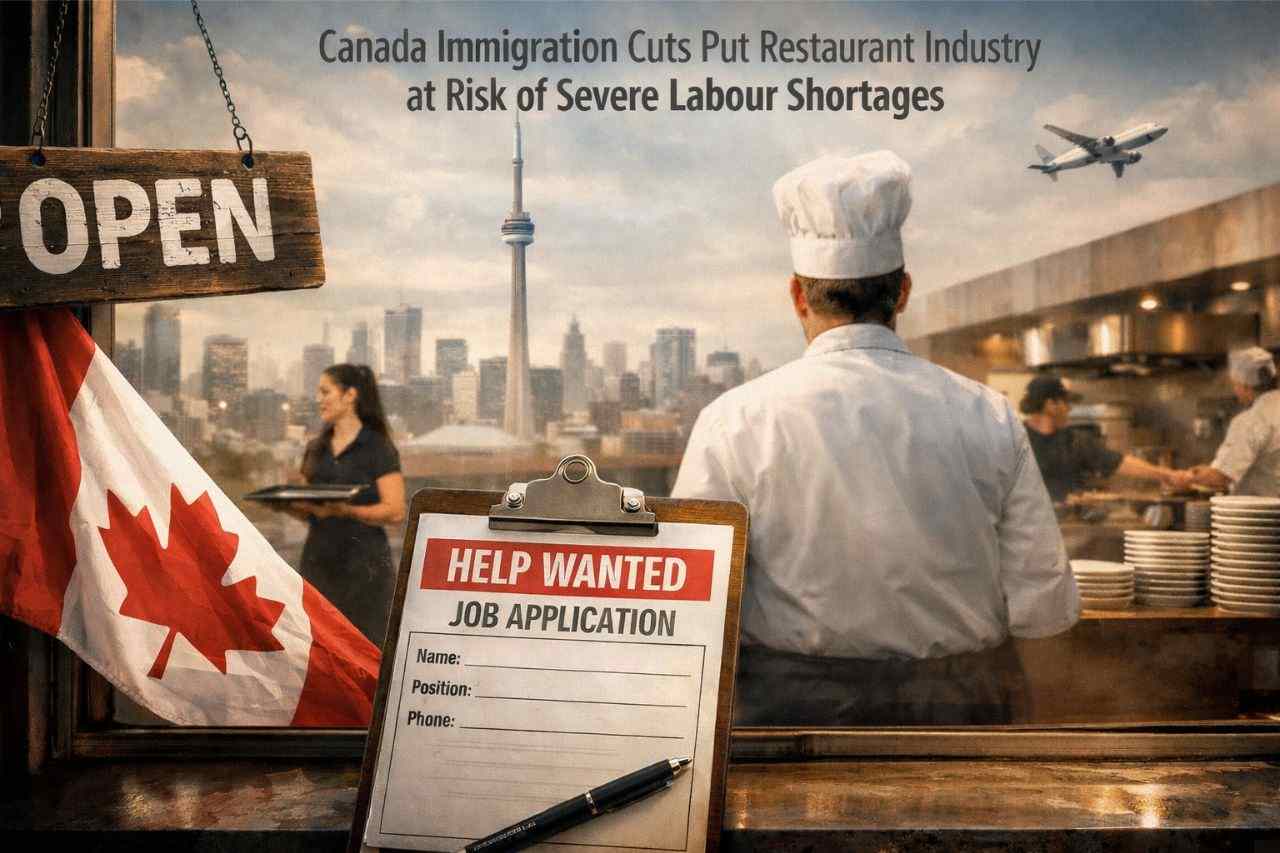
The Canada immigration cuts restaurant industry impact is becoming increasingly visible as operators across the country warn of worsening staff shortages. With the federal government reducing temporary resident admissions by 43 percent for 2026, restaurant owners say the sector faces an added strain on top of an already fragile recovery.
Industry leaders caution that these reductions could push thousands of businesses closer to closure while limiting long-term stability for immigrant workers who form the backbone of food service operations.
Why Restaurants Rely Heavily on Immigrant Workers
Canada’s food-service sector employs approximately 1.2 million people, and immigrants make up a significant portion of that workforce.
Key realities include:
- One in four restaurant workers is an immigrant
- Temporary workers often fill roles Canadians avoid
- International students previously filled major staffing gaps
As domestic interest in hospitality careers declined over the past decade, restaurants increasingly relied on newcomers to keep operations running.
What the Immigration Cuts Change
The federal government announced that temporary resident admissions will drop to 385,000 in 2026, down sharply from 2025 levels. Officials say the reduction is intended to ease pressure on housing, infrastructure, and public services.
However, restaurant operators warn the policy shift may worsen labour shortages.
| Impact Area | Expected Outcome |
| Hiring timelines | Longer delays |
| Vacant positions | Up to 150,000 by 2027 |
| Business stability | Higher closure risk |
Industry Leaders Sound the Alarm
Restaurant owners across Canada report difficulty retaining trained staff. Many temporary workers who spend years building careers in food service now face barriers to permanent residency.
According to Restaurants Canada, future immigration reductions could lead to an additional 50,000 unfilled positions, compounding existing shortages.
Nearly 40 percent of restaurants are currently operating at a loss or just breaking even, a sharp increase from pre-pandemic levels.
Long-Term Effects on Workers and Communities
The cuts also affect workers who rely on restaurant jobs as a pathway to settlement. Many newcomers’ gain:
- Canadian work experience
- Professional networks
- Language skills
When permanent residence pathways narrow, trained workers may be forced to leave, creating repeated hiring cycles for employers.
Broader Economic Consequences
Economists warn that abrupt policy swings create instability. During the pandemic recovery, Canada expanded access to temporary workers to address severe labour shortages. Now, rapid reductions risk reversing those gains.
Rural and aging communities are expected to feel the impact most, where labour shortages are already acute.
Calls for Policy Adjustment
Industry advocates are urging Ottawa to:
- Align immigration targets with labour market needs
- Support pathways for workers already in Canada
- Address sector-specific shortages
Officials from Immigration, Refugees and Citizenship Canada maintain that programs remain responsive to economic changes, though no future adjustments have been confirmed. The Canada immigration cuts restaurant industry challenge highlights the delicate balance between population management and workforce sustainability. Without targeted solutions, labour shortages may deepen, affecting businesses, workers, and local economies alike.
As immigration policies tighten, workers and employers in the restaurant sector must act early to protect their future in Canada. Whether you are a temporary worker seeking permanent residency or an employer supporting your staff, guidance from a certified Canadian immigration consultant can make a real difference. Connect with ImmigCanada immigration consulting services and work with the Best RCIC in Canada to explore lawful, long-term immigration options tailored to your situation.
Leave a Reply