

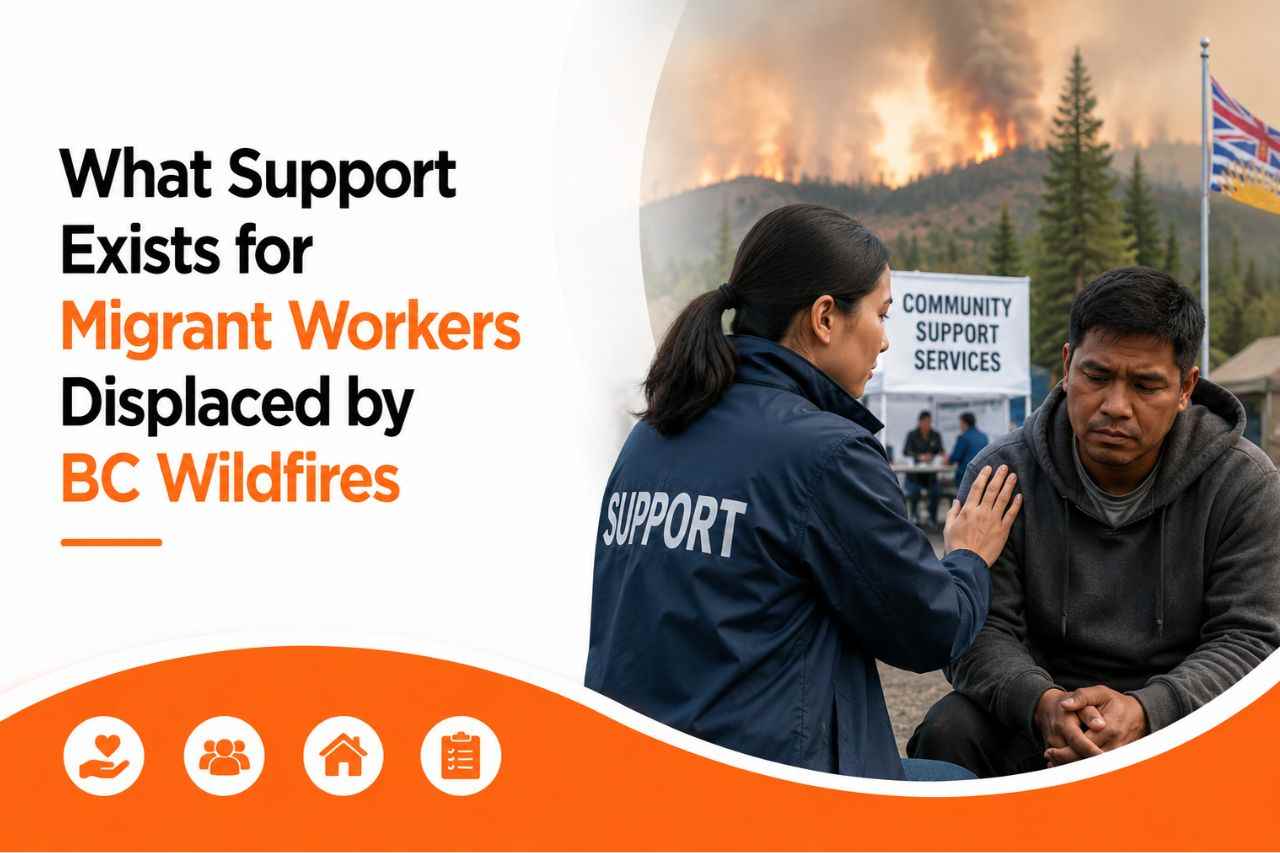

The Bald Range wildfire near Summerland, BC forced more than 20,000 residents to evacuate, displacing roughly 100 temporary foreign workers in the Okanagan. Federal supports now available to affected workers include the Migrant Worker Support Program, employer transfers under the Seasonal Agricultural Worker Program, and up to six months to restore or extend status for temporary residents affected by a natural disaster.
How Are Temporary Foreign Workers Affected When Disasters Strike?
Temporary foreign workers face a specific kind of vulnerability during emergencies like the Bald Range fire. Most work under agreements tied to a single employer or a single farm, so an evacuation order does not just displace them from their home, it can cut off their income at the same time. Agricultural workers in particular are often paid by the hours worked, so days lost to an evacuation translate directly into lost wages, with no guarantee the work will still be there once the evacuation order lifts.
Many affected workers are also early in the current season and have not yet accumulated the insurable hours needed to qualify for Employment Insurance, leaving a gap between losing income and having a federal safety net to fall back on.
What Federal Supports Are Currently Available to Displaced Workers?
Employment and Social Development Canada has confirmed that its Migrant Worker Support Program can assist affected workers with practical needs during a wildfire or similar emergency, including help replacing identification documents and finding temporary housing.
On the immigration side, IRCC has confirmed that temporary residents affected by a natural disaster now have up to six months to apply to restore or extend their status, a change introduced earlier this year specifically to give people in this kind of situation more breathing room than the standard timelines allow.
Can Displaced Workers Change Employers If Their Job Is Affected?
Yes, and this is one of the more useful protections currently in place. Workers under the Seasonal Agricultural Worker Program can be transferred to a different employer where possible if the wildfire has disrupted their original placement. Separately, workers holding employer-specific work permits may seek new employment while their current situation is unresolved, and can apply for a new work permit tied to that new employer. Under IRCC’s existing public policy on changing employers, eligible workers can begin the new job while that application is still being processed, rather than waiting idle for a decision.
What Should Affected Workers and Employers Do Right Now?
Workers who have been evacuated should document their situation as early as possible: keep evacuation notices, any communication from their employer about ongoing work, and a record of days missed. That documentation matters for Employment Insurance claims, for any application to restore or extend status, and for accessing emergency supports through the Migrant Worker Support Program.
A Seasonal Agricultural Worker Program participant from Mexico, working his eighth season in the Okanagan, was evacuated from an orchard property with no clear return date. Rather than wait out the uncertainty, our team helped confirm his eligibility for an employer transfer under SAWP and walked him through the documentation needed in case his original placement did not resume, protecting both his income and his status while the situation on the ground was still unfolding.
Employers, meanwhile, should not assume a temporary lapse in work automatically puts a worker’s status at risk. Between the six-month restoration window and the existing employer-change policy, there is more flexibility available this year than in past wildfire seasons, but workers still need to act within the applicable deadlines rather than assume the flexibility is indefinite.
Frequently Asked Questions
Migrant worker organizations estimate that around 100 workers were evacuated from the Okanagan region as a result of the Bald Range wildfire.
It is a federal program administered by Employment and Social Development Canada that can help temporary foreign workers with needs like replacing identification or finding temporary housing during emergencies.
Temporary residents affected by a natural disaster now have up to six months to apply to restore or extend their status, which is intended to prevent exactly this outcome.
Yes, where possible, SAWP participants can be transferred to another employer if their original placement is disrupted by an event like a wildfire.
Eligible workers may begin working for a new employer while their new work permit application is being processed, under IRCC’s existing public policy on changing employers.
Only if they have accumulated sufficient insurable hours, which can be a challenge for workers who are early in their current season when a disaster occurs.
If you’re a temporary foreign worker affected by a wildfire or other emergency, or an employer trying to support your team, book a consultation with ImmigCanada to protect your status and your workforce.