

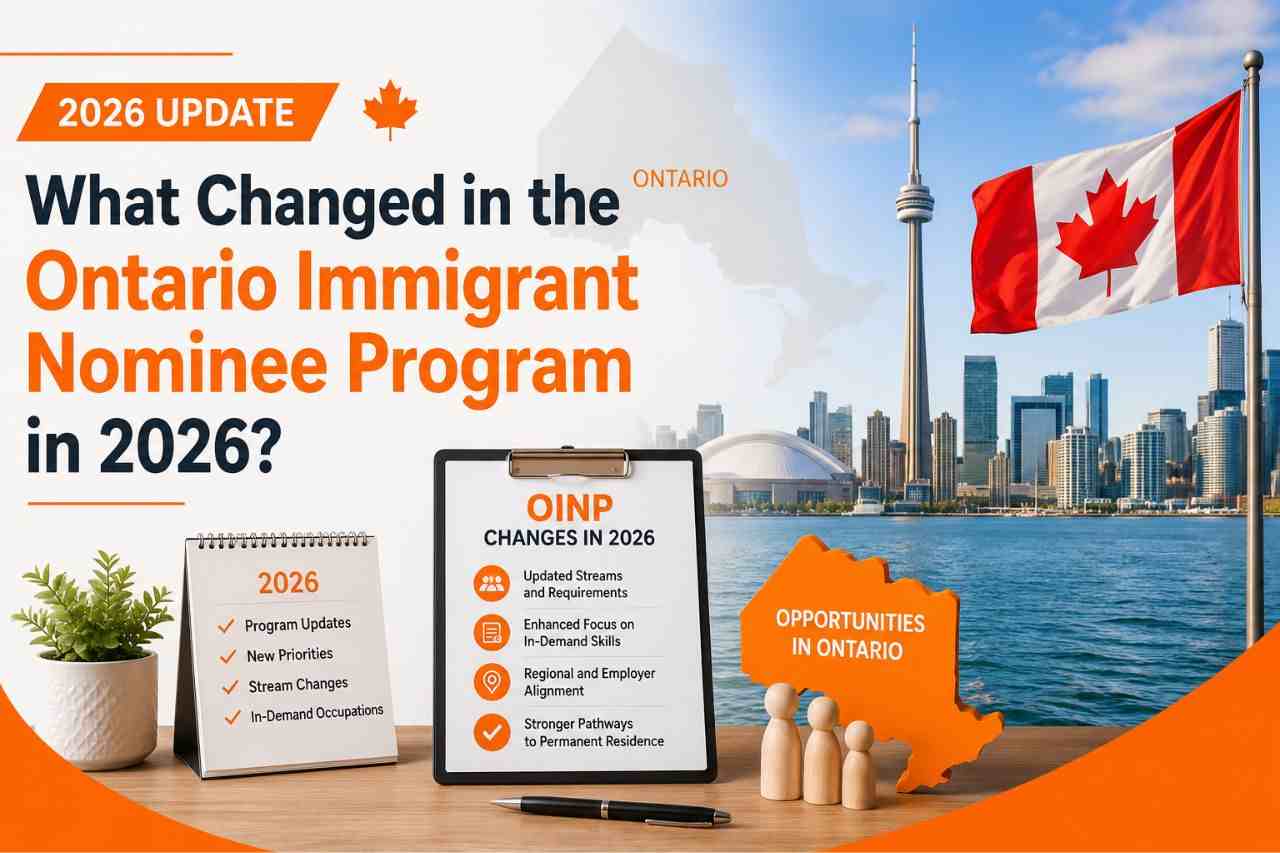

Ontario replaced eight Ontario Immigrant Nominee Program streams with one new pathway called the Ontario Workforce Priority stream on June 25, 2026. The change raises language and education requirements, lowers revenue thresholds for rural employers, and tightens compliance timelines. The new Expression of Interest portal opens later this summer.
Redesigning the Ontario Immigrant Nominee Program – Why Now?
Ontario does not redesign its nominee program often. The province last attempted a structural shake-up years ago, and the gap between then and now tells you something. Demand for skilled workers in healthcare, construction, and manufacturing kept climbing, while the old eight-stream structure grew clunky. Employers filed under the wrong stream. Candidates missed cut-offs because the categories overlapped. Ontario heard the complaints through its Regulatory Registry consultations and decided a single, cleaner stream would serve everyone better.
At ImmigCanada, our caseworkers had flagged this exact friction to clients for two immigration cycles running. Job offers stalled because employers picked an outdated stream. So this redesign, while sudden on paper, was not a surprise to anyone tracking provincial nomination trends closely.
What is The Ontario Workforce Priority Stream
The Ontario Workforce Priority stream is the single replacement for the previous eight Employer Job Offer and Express Entry-linked streams. It folds skilled trades, in-demand occupations, international students, foreign workers, master’s graduates, PhD graduates, and French-speaking applicants into one pathway, structured around National Occupational Classification TEER levels rather than narrow job categories.
Two main tracks exist under the new stream:
- TEER 0 to 3 pathway — for skilled, internationally trained workers with a full-time, permanent Ontario job offer.
- TEER 4 to 5 pathway — for workers in lower-TEER occupations, also requiring a full-time, permanent job offer.
A separate route exists for self-employed physicians who hold OHIP billing privileges and good standing with the College of Physicians and Surgeons of Ontario. No job offer is required for that group.
Source: 2026 Ontario Immigrant Nominee Program Updates
Does Proof Of Funds Or Job Offer Timing Change Under The New Stream
Job offer timing now matters more than it used to. For the TEER 0 to 3 pathway, candidates need six months of consecutive experience in the job offer role within the last twelve months, or two cumulative years within the last five years in the same NOC occupation. Recent Ontario graduates get a shortcut: three consecutive months in the job offer role qualifies them. Licensed professionals are exempt from the work experience test altogether.
For the TEER 4 to 5 pathway, the bar is nine cumulative months of experience with the job offer employer within the last two years. Language requirements sit at Canadian Language Benchmark 6 for most TEER 0 to 3 occupations, dropping to CLB 5 for some, and CLB 4 for TEER 4 to 5 roles.
What Happens To Existing Expressions Of Interest
If you already registered an Expression of Interest, or had a job offer logged under one of the eight retired streams, here is the practical reality. The portal is closed to new submissions under the old categories, and no further invitations will go out under those streams. Pending EOIs and job offers that never converted into an invitation will be withdrawn automatically over the coming weeks as Ontario rebuilds its application platform. Affected applicants and employers will get a direct notice, so do not assume silence means your file is still active.
Employers who already hold a registered employer portal account will not need to re-register from scratch. However, once the portal reopens, they will need to submit a fresh job offer and a new application for approval of an employment position to trigger a new EOI under the Workforce Priority stream.
How Does This Affect Rural And Northern Employers
Ontario built a real incentive into this redesign for communities outside the Greater Toronto Area. Employers located in a census division with a population under 150,000 now face lower gross annual revenue thresholds to participate in the program. That is a meaningful shift for towns in Northern Ontario and rural agricultural regions that have struggled to compete with urban employers for nominee slots.
Case Study: A Northern Ontario Employer’s Path Forward
One of our RCIC-led client files involved a mid-sized food processing employer in a rural census division near Thunder Bay, supporting a Personal Support Worker on a TEER 3 job offer with a CRS-adjacent profile and two years of cumulative Canadian experience. Under the old stream structure, this employer’s revenue sat just below the eligibility floor, blocking the nomination outright. Under the new Workforce Priority rural threshold, that same employer now qualifies. Our consultancy is already remapping similar pending files against the new criteria so clients are first in line once the Expression of Interest portal reopens this summer.
What Should Candidates And Employers Do Right Now
Do not wait for the portal to reopen before acting. Review your current occupation against its TEER level, confirm your language test results still meet CLB 6, 5, or 4 depending on your pathway, and gather updated proof of your work experience timeline. Employers should prepare a fresh job offer and a new application for approval of an employment position, since old approvals do not automatically carry forward.
Program integrity enforcement has also tightened. Response windows for Administrative Monetary Penalty notices and Ban orders dropped from 60 days to 30 days, and notices can now be delivered by email or mail and deemed received without proof of delivery. That is a narrower margin for error than before, and one more reason to have an experienced representative reviewing your file before you submit anything new.
Frequently Asked Questions
The change took effect on June 25, 2026, under amendments to Ontario Regulation 422/17.
No. It is closed to new submissions and is expected to reopen later in the summer of 2026 under the new stream.
Most candidates do, except self-employed physicians, who may qualify without one if they meet OHIP and licensing requirements.
CLB 6 for most TEER 0 to 3 occupations, CLB 5 for select occupations, and CLB 4 for TEER 4 to 5 roles.
No. Old EOIs that did not result in an invitation will be withdrawn, and a new EOI must be registered once the portal reopens.
Yes. Employers in rural and northern census divisions with populations under 150,000 now benefit from lower revenue thresholds.
No. Ontario has described this as phase one of a two-phase redesign, with further changes expected.
ImmigCanada is closely monitoring every detail of Ontario’s two-phase OINP redesign as it unfolds. If your Expression of Interest, job offer, or nomination strategy was built around one of the eight retired streams, book a consultation with our team today so we can map your file onto the new Ontario Workforce Priority stream before the portal reopens.
Charting Your Path Through Ontario’s New Immigration Landscape
Regulatory redesigns like this one reward candidates and employers who move early and accurately, not those who wait for clarity that may never fully arrive. RCIC Eivy Joy Quito and the ImmigCanada team specialize in translating dense regulatory changes, like the Ontario Workforce Priority stream, into a clear, personalized action plan.
Whether you are an internationally trained professional weighing your TEER eligibility or an employer rebuilding a job offer from scratch, our consultants can review your file, flag risks under the tightened compliance rules, and help you submit a strong application the moment the Expression of Interest portal reopens. A successful Canadian immigration journey rarely happens by accident; it happens with the right guidance at the right moment, and that is exactly what our team is here to provide.