

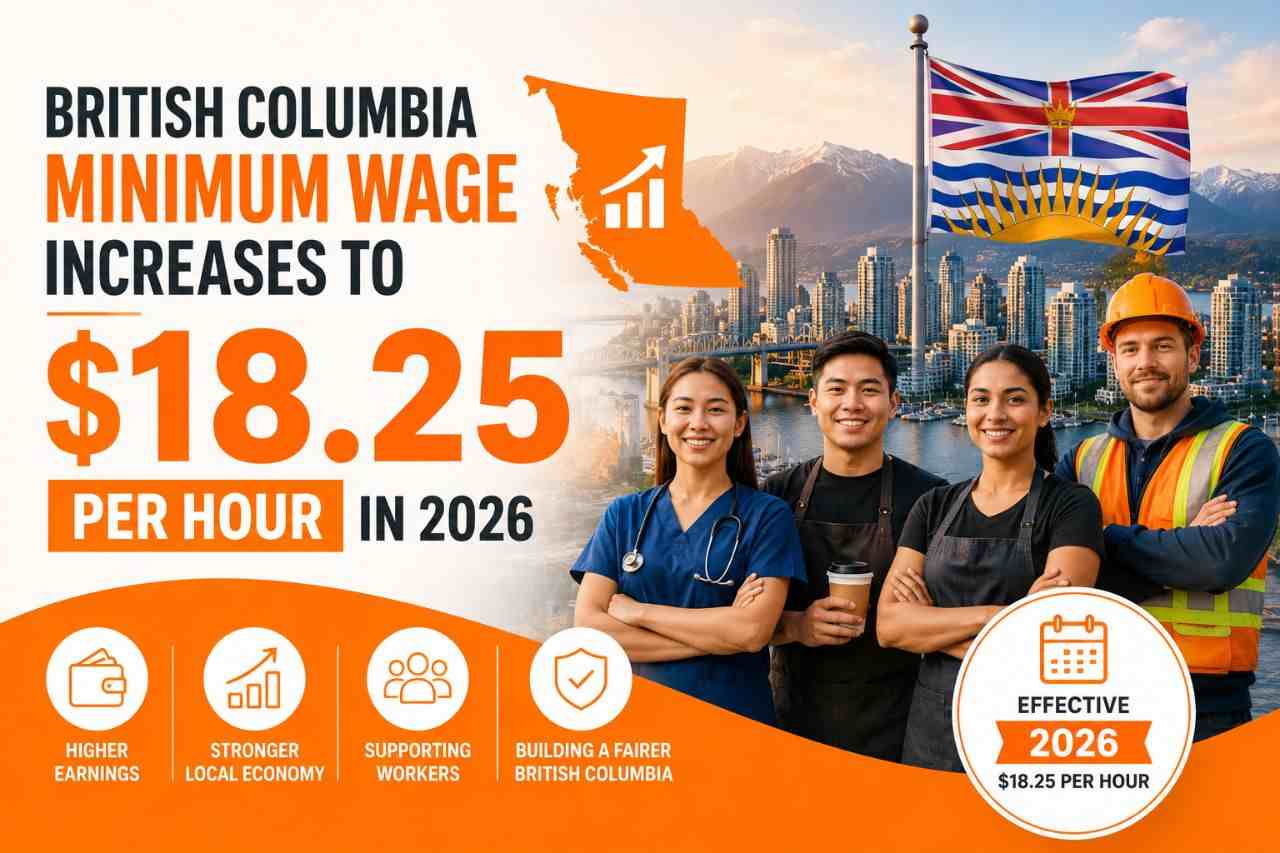

Starting June 1, 2026, the British Columbia Minimum Wage 2026 officially increased from $17.85 to $18.25 per hour, making it the highest provincial minimum wage in Canada.
Unlike one-time wage adjustments, British Columbia now uses an annual inflation-based model. The latest increase reflects a 2.1% adjustment linked directly to the province’s average inflation rate during the previous year.
For workers, employers, newcomers, and international students, the change represents an important development in Canada’s labour market.
How Much Has the BC Minimum Wage Increased?
| Effective Date | Minimum Wage |
| Before June 1, 2026 | $17.85/hour |
| June 1, 2026 | $18.25/hour |
The increase adds:
- $0.40 per hour
- Approximately $16 extra per week for full-time workers
- Roughly $832 more annually before deductions
Why British Columbia Adjusts Wages Annually
The provincial government introduced annual minimum wage adjustments to help workers keep pace with rising living costs.
Key objectives include:
- Protecting purchasing power
- Supporting low-income workers
- Addressing inflation pressures
- Maintaining labour market competitiveness
Many minimum wage workers are employed in:
- Retail
- Hospitality
- Food services
- Caregiving occupations
- Entry-level service industries
Source: Minimum wage increasing to $18.25 in 2026
Who Benefits from the New Wage Rate?
The increase applies to most employees earning minimum wage, including:
- Retail Workers: Thousands of retail employees across BC will immediately benefit.
- Food Service Employees: Restaurant and hospitality workers receiving minimum wage will see higher earnings.
- Delivery Workers: App-based delivery and ride-hailing workers will also receive updated minimum compensation rates.
- Live-In Workers: Specialized categories such as resident caretakers and live-in camp leaders are included.
What It Means for Newcomers and International Students
For newcomers settling in British Columbia, the BC minimum wage increase may provide additional financial support during the early stages of settlement.
Many temporary residents and international students work in sectors where minimum wage rates directly affect earnings.
While higher wages can improve affordability, newcomers should also consider:
- Housing costs
- Transportation expenses
- Regional cost of living
- Employment opportunities
Understanding both wages and living expenses is essential when choosing where to settle in Canada.
Labour Market Outlook in British Columbia
British Columbia continues to experience demand for workers in several sectors, including:
- Healthcare
- Construction
- Technology
- Hospitality
- Transportation
As wages continue to rise, employers may focus more heavily on attracting and retaining skilled workers through competitive compensation packages.
How ImmigCanada Can Help
If you are planning to work or immigrate to British Columbia, understanding labour market trends can help you make informed decisions.
At ImmigCanada, licensed RCIC Eivy Joy Quito (R512178) assists clients with:
- Work Permits
- Express Entry
- Provincial Nominee Programs
- Study Permits
- Permanent Residence Applications
You can also explore our detailed information on the following on our website:
The British Columbia Minimum Wage 2026 increase to $18.25 per hour reinforces the province’s effort to help workers keep pace with inflation.
For newcomers, students, and workers already living in BC, the increase offers additional earning potential while highlighting the province’s strong labour market and economic opportunities.
Frequently Asked Questions (FAQs)
The British Columbia minimum wage increased to $18.25 per hour on June 1, 2026.
The increase reflects a 2.1% inflation adjustment designed to help workers maintain purchasing power.
Among Canadian provinces, British Columbia now has the highest minimum wage. Nunavut and Yukon have higher rates but are territories.
Yes. The wage increase also affects app-based delivery and ride-hailing workers through updated minimum compensation rates.
The BC minimum wage of $18.25 per hour is slightly higher than the federal minimum wage.