

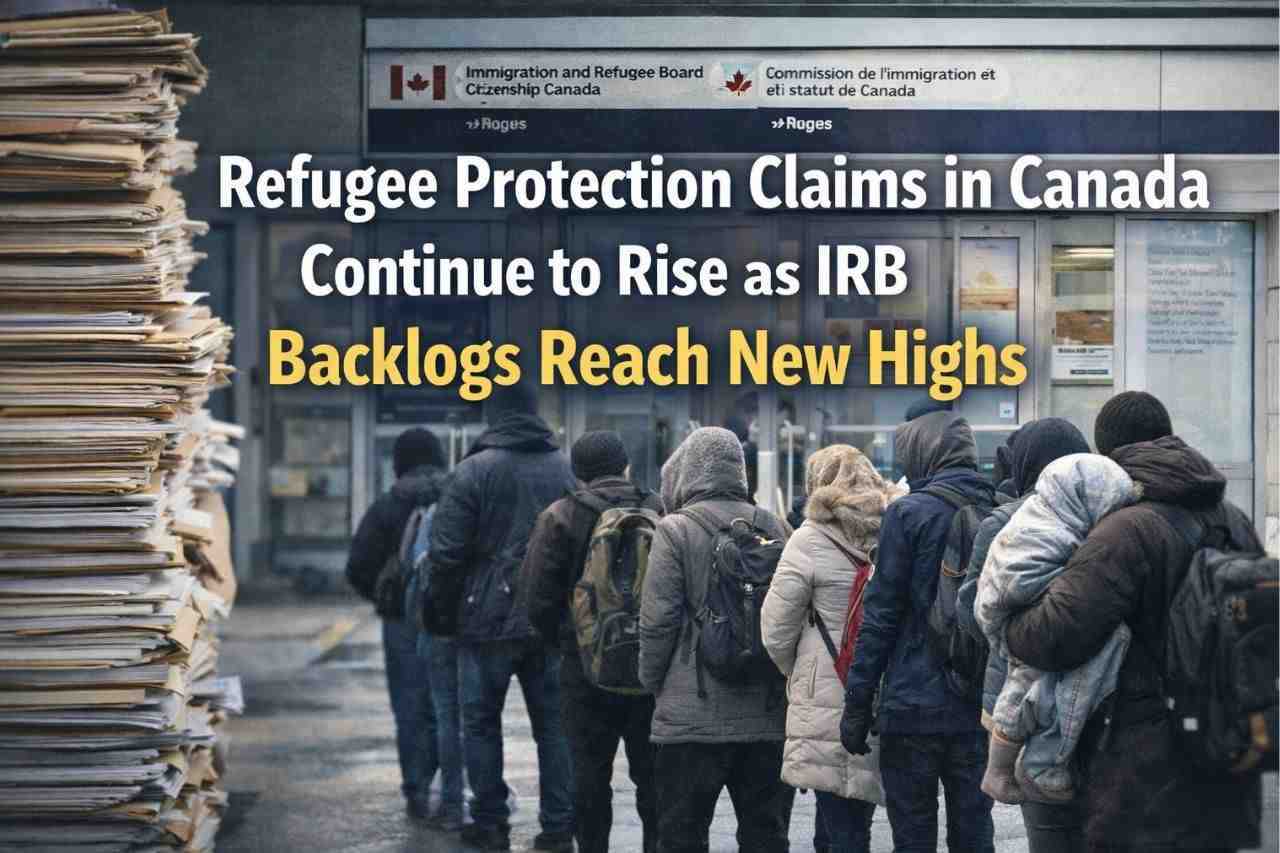

Canada has always stood as a global leader in humanitarian protection and refugee support. Yet, as new data from the Immigration and Refugee Board of Canada reveals, the country is now facing an unprecedented surge in refugee protection claims, appeals, and pending cases. The growing volume is reshaping how Canada manages asylum requests and highlights the urgent need for faster processing and system efficiency.
The latest monthly and quarterly updates from the IRB show a steady increase in intake across all divisions. Refugee protection claims, refugee appeals, and immigration appeals have all recorded significant growth from 2023 through the end of 2025. For claimants, this means longer waiting periods. For policymakers, it signals rising pressure on Canada’s refugee determination system.
Refugee Protection Claims in Canada Are Climbing Rapidly
Refugee protection claims in Canada have shown a consistent upward trend. In December 2023, the pending caseload stood at over 157,000. By December 2024, this number had crossed 272,000. As of December 2025, pending refugee protection claims have exceeded 300,000. This steady rise reflects both global displacement pressures and Canada’s role as a preferred destination for those seeking safety.
Each month in 2024 and 2025 saw thousands of new claims added. Even as finalizations increased, intake continued to outpace decisions. This imbalance has caused a growing queue of cases waiting for hearings. Many claims finalized in 2025 were originally referred in earlier periods, which further shows the strain on processing capacity.
For asylum seekers, this means longer periods in limbo. For Canada, it means higher demand for housing, social services, and legal support. Despite these pressures, Canada continues to accept claims in line with international obligations and humanitarian values.
Refugee Appeals Are Also Rising Across the Country
Refugee appeals have followed a similar pattern. From under 3,000 pending cases at the end of 2023, the backlog climbed steadily through 2024 and reached over 4,600 by December 2025. Each month, hundreds of new appeals were filed while finalizations struggled to keep pace.
Appeals can be filed by claimants or by the Minister, and many are returned from the Federal Court for re-determination. This creates additional workload for the Refugee Appeal Division. The rise in appeals reflects both higher initial refusals and increased legal awareness among claimants.
For applicants, appeals provide an important safeguard. For the system, they add another layer of complexity. The growing appeal backlog underlines the need for stronger front-end decision quality and faster review timelines.
Immigration Appeals Show Consistent Growth
Immigration appeals at the Immigration Appeal Division have also increased. From late 2023 through 2025, both stayed and non-stayed pending cases continued to rise. By December 2025, pending non-stayed appeals alone crossed 2,400 cases.
These appeals include sponsorship refusals, residency obligation cases, removal orders, and other immigration decisions. Many families and individuals rely on the appeal process as their last chance to remain in Canada. The rising numbers indicate not only higher refusals but also greater reliance on legal remedies.
For Canada, this reflects a system under pressure from high volumes across every stream of immigration. Skilled workers, family class applicants, and humanitarian cases are all affected by longer timelines.
What These Numbers Mean for Canada’s Immigration System
The steady growth in refugee protection claims in Canada and related appeals is a sign of Canada’s global relevance and humanitarian reputation. At the same time, it reveals operational strain that must be addressed.
Longer processing times can affect settlement outcomes. Claimants may face challenges in employment, housing, and mental wellbeing while waiting. Communities may experience pressure on local services. For the federal government, balancing compassion with efficiency becomes critical.
Canada has already taken steps to modernise systems, increase digital processing, and allocate more resources. Yet, the data suggests that further action will be required to restore balance between intake and final decisions.
Why This Matters for Newcomers and Applicants
For anyone considering refugee protection claims in Canada, these trends highlight the importance of proper preparation, accurate documentation, and professional guidance. Errors, missing information, or weak submissions can lead to refusals and long appeal processes.
Applicants must be clear, consistent, and well supported. The stakes are high. Lives, families, and futures depend on these decisions. Canada remains open and fair, but the system demands precision and care.
Refugee Protection Claims in Canada Reflect Both Global Need and National Responsibility
The rise in refugee protection claims in Canada is a clear reflection of global instability and Canada’s trusted position as a safe haven. While backlogs and delays present challenges, they also highlight Canada’s role in offering protection, dignity, and opportunity to those in need.
As numbers continue to grow, it becomes even more important for applicants to approach the process correctly from the start. Working with a certified Canadian immigration consultant ensures that refugee claims, appeals, and humanitarian applications are prepared with accuracy and strategy. ImmigCanada immigration consulting services, led by Eivy Joy Quito, a respected Regulated Immigration Consultant and widely regarded as one of the Best RCIC in Canada, provide trusted support to individuals and families seeking protection and stability in Canada.
Canada continues to stand for fairness, safety, and second chances. With the right guidance, applicants can move forward with confidence.