

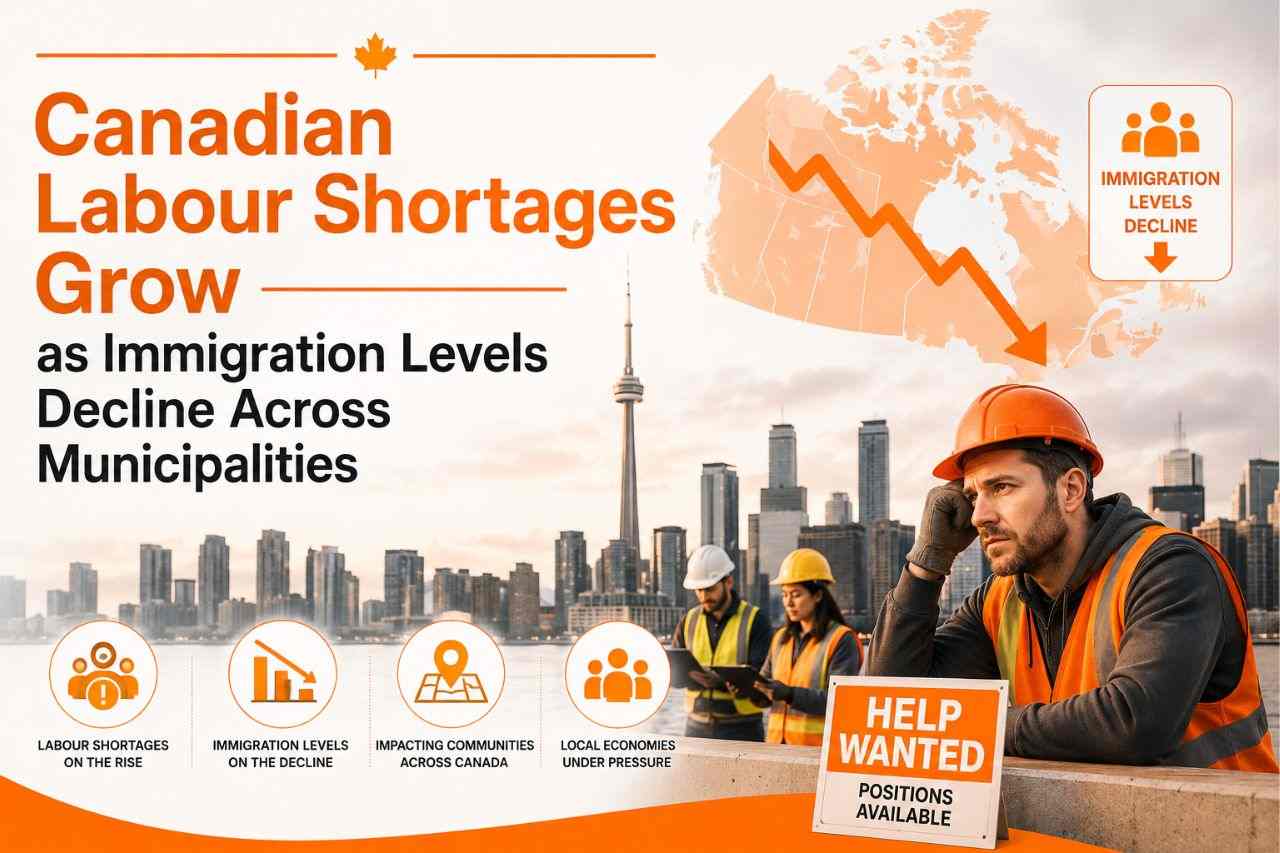

Canada’s cities and towns are raising concerns about growing Canadian labour shortages as recent federal immigration reductions begin affecting local communities. During the Federation of Canadian Municipalities (FCM) annual meeting in Edmonton, municipal leaders and labour representatives warned that lower immigration levels are creating workforce gaps in essential sectors such as healthcare, childcare, food production, construction, and skilled trades.
The discussion comes as Canada continues implementing immigration targets aimed at reducing temporary resident levels. However, local governments argue that immigrants and migrant workers remain vital to economic growth, public services, and community development.
Why Municipalities Are Concerned
Across the country, municipalities rely heavily on newcomers to fill jobs that are difficult to staff locally. Many of these positions support critical services that Canadians depend on every day.
According to representatives from the Canadian Union of Public Employees (CUPE), recent immigration reductions are already creating challenges for:
- Healthcare staffing
- Childcare services
- Construction and housing development
- Food production
- Skilled trades occupations
- Community support organizations
- School enrollment growth
Municipal leaders say fewer newcomers entering Canada could make it harder for communities to maintain essential services while supporting economic growth.
The Local Impact of Immigration Reductions
The effects extend beyond labour shortages alone.
Burnaby Councillor Maita Santiago noted that immigration changes are affecting housing projects, workforce participation, local businesses, and school systems. Community organizations that support vulnerable populations are also facing additional pressure.
Similarly, Regina Councillor Victoria Flores highlighted concerns that reduced funding and changing immigration policies leave municipalities managing unexpected consequences without adequate resources.
Many communities have built long-term growth strategies around immigration. As population growth slows, municipalities may face new challenges in maintaining economic momentum and attracting investment.
Source: Canadian Labour Shortages Grow
Why Immigrants Remain Essential to Canada’s Workforce
Canada’s aging population continues to create demand for workers across multiple industries.
Immigrants and migrant workers help fill labour shortages in occupations where employers struggle to recruit enough domestic workers. They also contribute to:
- Economic growth
- Business expansion
- Tax revenues
- Housing demand
- Consumer spending
- Population growth in smaller communities
Many sectors currently experiencing worker shortages, including healthcare and skilled trades are also priority occupations under Canada’s immigration programs.
What This Means for Future Immigration Policies
While the federal government aims to achieve more sustainable immigration levels, municipal leaders are urging policymakers to consider local workforce realities.
Labour shortages remain a major concern in many regions of Canada. As employers continue searching for workers, immigration is expected to remain a key part of long-term workforce planning.
Programs such as Express Entry, Provincial Nominee Programs (PNPs), and employer-driven pathways continue to provide opportunities for skilled workers who can help address labour market needs.
What ImmigCanada Is Seeing on the Ground
At ImmigCanada, our team continues to see strong demand from Canadian employers seeking skilled workers in healthcare, trades, transportation, and service industries.
RCIC Eivy Joy Quito (Licence #R512178) regularly advises clients on immigration pathways that align with labour market needs and provincial priorities. Despite recent policy changes, many immigration programs remain active and continue selecting qualified candidates.
For skilled workers considering Canada, understanding where labour shortages exist can significantly improve immigration prospects.
Explore our Provincial Nominee Program Guide and Express Entry resources to identify pathways that match your qualifications.
Looking to Work and Settle in Canada?
Canada’s labour market continues to evolve, but opportunities remain strong in many sectors. If you want professional guidance on work permits, permanent residence, or provincial immigration programs, contact ImmigCanada today and speak with our licensed RCIC team.
Frequently Asked Questions (FAQs)
Municipalities say lower immigration levels may worsen labour shortages and place additional pressure on essential services such as healthcare, childcare, and housing development.
Healthcare, skilled trades, food production, childcare, transportation, and construction are among the sectors facing ongoing worker shortages.
Yes. Immigrants contribute significantly to workforce growth, business development, population growth, and essential public services.
Yes. Many immigration programs continue targeting occupations facing labour shortages across Canada.
Express Entry, Provincial Nominee Programs (PNPs), Atlantic Immigration Program (AIP), and employer-sponsored pathways all help address workforce needs.