


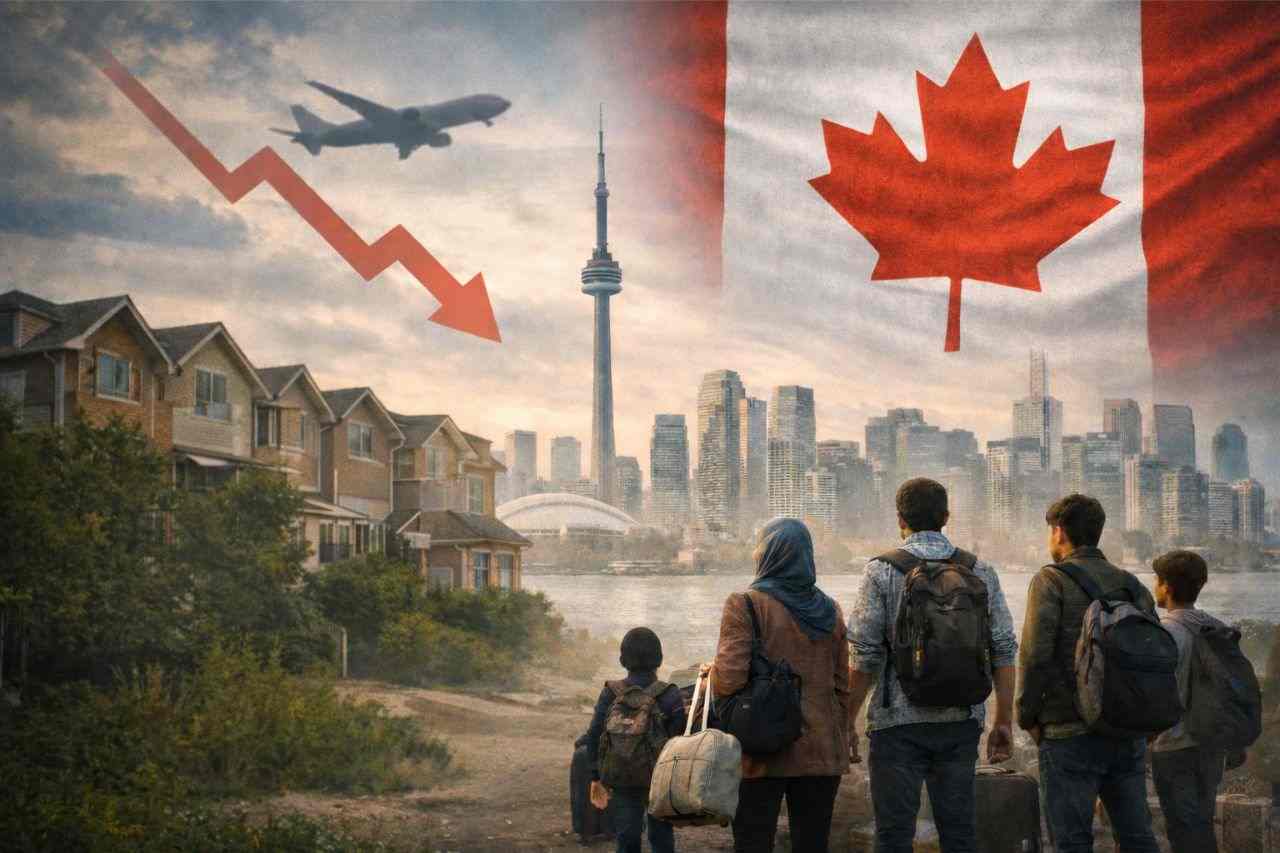
Canada’s population growth in major cities has slowed dramatically, marking a clear turning point after years of rapid urban expansion. New data released by Statistics Canada shows that the country’s 41 census metropolitan areas grew by just 1.0% between July 2024 and July 2025. This is a steep drop from the 3.5% growth recorded the year before and reflects the direct impact of changing federal immigration policies.
Decline in Temporary Residents Drives the Slowdown
The slowdown is closely tied to a decline in non-permanent residents, particularly international students and temporary workers. Recent federal measures introduced caps and tighter controls on temporary resident intake, reshaping how population growth unfolds across Canada’s largest cities. While international migration remains a key driver of population change, permanent immigration has now overtaken temporary residents as the primary source of growth.
Big Cities Feel the Impact Most
Canada’s largest urban centres experienced the sharpest shifts. Toronto recorded virtually no population change during the period, a striking contrast to the record growth seen the previous year. Montréal and Vancouver also posted minimal growth, largely due to steep reductions in non-permanent residents. Vancouver, in particular, saw a net loss of temporary residents, reversing gains recorded only a year earlier.
Mid-Sized Cities Continue to Gain Momentum
Despite the slowdown in traditional immigration hubs, several mid-sized cities continued to grow at a strong pace. Edmonton, Calgary, and Moncton all recorded growth rates close to 3.0%. In these cities, permanent immigration played a leading role, supported by interprovincial migration and employment-driven settlement. This shift suggests newcomers are increasingly prioritizing affordability, job availability, and long-term stability.
Newcomers Are Choosing Different Destinations
Data also reveals that new immigrants are no longer concentrating as heavily in Toronto and Montréal. In both Ontario and Quebec, a rising share of newcomers are settling in smaller cities and surrounding regions. This redistribution is easing pressure on housing markets in major urban centres while supporting economic growth in emerging destinations.
What This Means for Canada’s Immigration Future
Canada’s urbanization rate has now stalled, with approximately 74.8% of Canadians living in a census metropolitan area. This rare pause underscores how immigration policy decisions are directly shaping settlement trends. As Canada balances immigration targets with housing and infrastructure capacity, population growth in major cities may continue to moderate.
For newcomers and employers alike, understanding where growth is shifting will be critical. Cities offering affordability, employment opportunities, and quality public services are becoming increasingly attractive in Canada’s evolving immigration landscape.
As immigration policies continue to evolve, choosing the right destination matters more than ever. For expert insights on regional trends and personalized guidance, visit ImmigCanada today.
Leave a Reply