

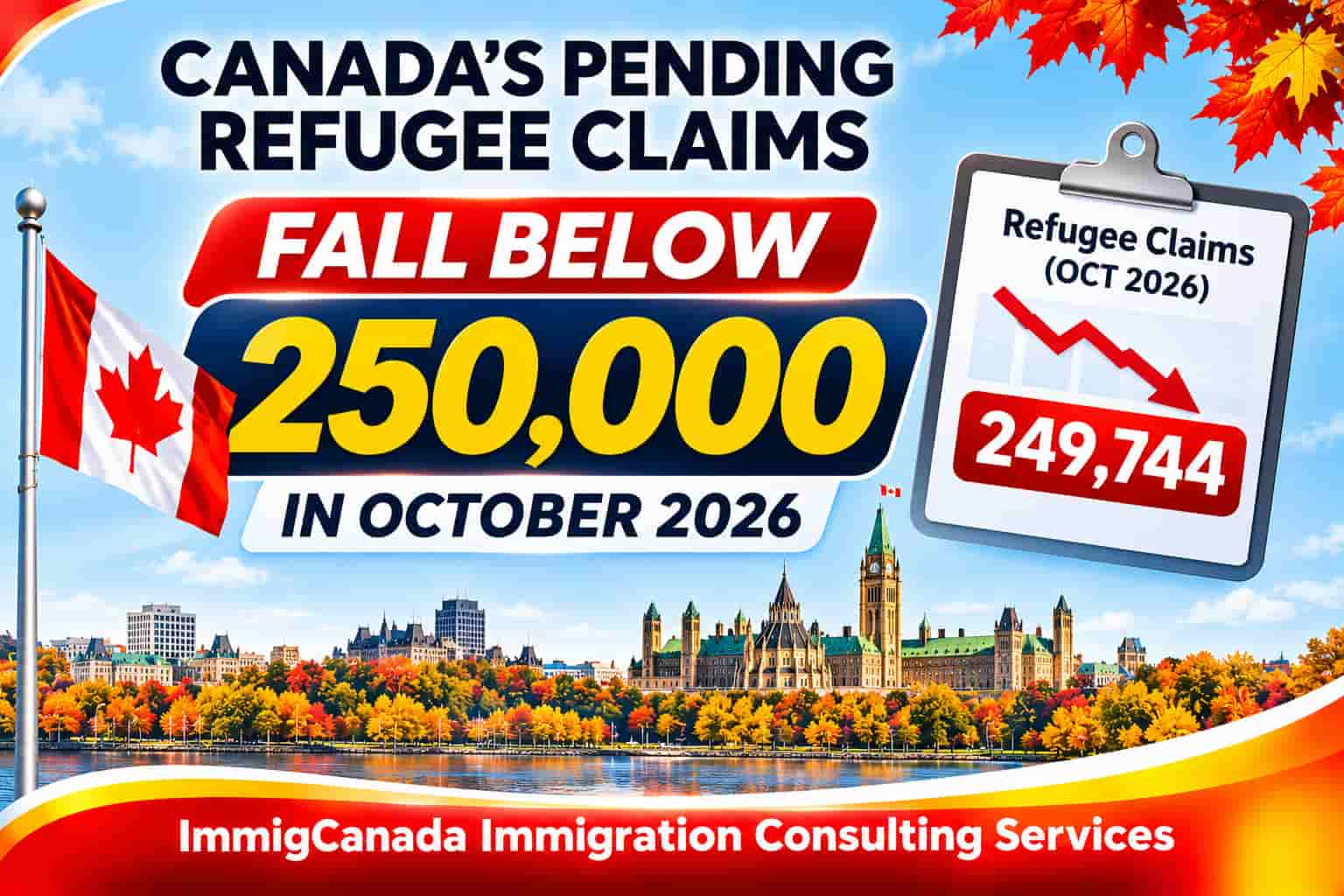

Canada’s pending refugee protection claims declined to 249,744 in October 2026, falling below the 250,000 mark for the first time in the reported period following a peak of 299,860 cases in December 2025.
The latest figures from the Immigration and Refugee Board of Canada (IRB) indicate that the Refugee Protection Division (RPD) finalized more cases than it received during October, contributing to the reduction in its pending inventory.
During the month, the RPD received 2,905 new cases and finalized 5,570 cases.
Meanwhile, pending refugee appeals at the Refugee Appeal Division (RAD) increased to 6,748. The division received 1,277 new appeals and finalized 939 during the same period.
The latest statistics offer insight into Canada’s refugee determination and appeal system, highlighting a decline in pending protection claims alongside continued pressure on the appeals inventory.
Canada’s Refugee Claim Backlog Falls to 249,744 in October 2026
According to the latest IRB data, Canada’s pending refugee protection claims decreased to 249,744 in October 2026.
This represents a decline from the peak of 299,860 pending claims recorded in December 2025.
The October figures show that the Refugee Protection Division finalized 5,570 cases, compared with 2,905 new cases received during the month.
The difference between finalized and newly received cases contributed to the reduction in the pending inventory.
Here is a breakdown of the October 2026 statistics:
| Refugee Protection Division activity | October 2026 |
| New cases received | 2,905 |
| Cases finalized | 5,570 |
| Pending refugee protection claims | 249,744 |
| Previous peak inventory in December 2025 | 299,860 |
The decline suggests that the RPD finalized more cases than it received during the month.
However, the remaining inventory of nearly 250,000 claims indicates that a substantial number of cases are still awaiting decisions.
Source: Canada’s Pending Refugee Claims – IRCC
Refugee Claim Intake Remains Relatively Low in 2026
The IRB data also highlights a reduction in monthly refugee claim intake compared with earlier levels.
In March 2026, the RPD received 5,884 cases. This number fell to 2,664 in April 2026, marking a notable decline in new claims.
Monthly intake has remained relatively low since April, with 2,905 new cases recorded in October.
The trend indicates that fewer new claims were entering the RPD inventory compared with the higher intake recorded in March.
A lower number of incoming cases, combined with the number of claims finalized, can help reduce the pending inventory over time.
However, monthly fluctuations should not be interpreted as a permanent change in refugee claim demand or Canada’s future asylum trends.
What Is the Refugee Protection Division?
The Refugee Protection Division is one of the divisions of the Immigration and Refugee Board of Canada.
It is responsible for determining whether individuals who make refugee protection claims in Canada qualify for protection under the applicable Canadian legal framework.
A refugee protection claim generally involves an individual seeking protection because they fear persecution or face other qualifying risks if returned to their country of origin or habitual residence.
The RPD examines the facts and evidence presented in each case and determines whether the claimant meets the applicable legal definition of a Convention refugee or a person in need of protection.
Each claim is assessed individually, and the outcome depends on the circumstances and supporting evidence.
Refugee Appeals Rise to 6,748 in October 2026
While pending refugee protection claims declined, the refugee appeal inventory recorded an increase.
The Refugee Appeal Division reported 6,748 pending appeals in October 2026.
During the month:
- 1,277 new appeals were filed.
- 939 appeals were finalized.
- 6,748 appeals remained pending.
The number of new appeals exceeded the number finalized during October, contributing to the increase in the appeal inventory.
This illustrates that developments in the initial refugee determination process do not necessarily translate into similar trends at the appeal stage.
What Is the Refugee Appeal Division?
The Refugee Appeal Division is responsible for reviewing certain decisions made by the Refugee Protection Division.
In general, eligible claimants whose refugee protection claims have been rejected by the RPD may have the right to appeal the decision to the RAD.
The appeal process provides an opportunity to challenge an eligible negative refugee determination, subject to the applicable legal requirements and exceptions.
The RAD generally reviews the RPD decision and may consider the evidence and legal arguments permitted under the governing framework.
Not every claimant has an automatic right to appeal. Certain categories of claims and circumstances are subject to statutory restrictions and exceptions.
Individuals considering an appeal should understand the applicable deadlines and procedural requirements.
Immigration Appeal Division Records 313 Finalized Cases
The latest IRB statistics also provide information about the Immigration Appeal Division (IAD).
In October 2026, the IAD:
- Finalized 313 cases.
- Received 256 new appeals.
The IAD deals with specific types of immigration appeals, including certain sponsorship refusals, removal orders and residency obligation matters, subject to the applicable legal provisions and restrictions.
It is important to distinguish the IAD from the RAD.
While the RAD deals with eligible appeals relating to refugee protection decisions, the IAD handles certain other immigration-related appeals.
Both divisions operate under the Immigration and Refugee Protection Act, but their jurisdictions and appeal processes are different.
Why Are Canada’s Refugee Claim and Appeal Backlogs Important?
The number of pending refugee claims and appeals is an important indicator of the workload facing Canada’s immigration and refugee determination system.
A substantial pending inventory can affect how quickly claims and appeals move through the decision-making process.
The latest October statistics reveal two different developments:
1. Fewer pending refugee protection claims: The RPD’s inventory declined to 249,744, supported by a higher number of finalized cases than new claims received.
2. More pending refugee appeals: The RAD’s inventory reached 6,748 because the number of new appeals filed exceeded the number finalized during the month.
These figures demonstrate that the initial refugee claim process and the appeal process have separate caseloads and processing dynamics.
For individuals seeking refugee protection, it is important to understand that each case is assessed on its own facts, evidence and applicable legal requirements.
Frequently Asked Questions
According to the latest IRB statistics, 249,744 refugee protection claims were pending in Canada in October 2026.
The Refugee Protection Division received 2,905 new cases during October 2026.
The Refugee Protection Division finalized 5,570 cases during October 2026.
The pending refugee protection inventory reached 299,860 cases in December 2025 before declining to 249,744 in October 2026.
The October figures show that the RPD finalized 5,570 cases while receiving 2,905 new cases. Finalizing more cases than it receives contributes to a reduction in the pending inventory.
The Refugee Protection Division is part of the Immigration and Refugee Board of Canada. It assesses refugee protection claims and determines whether claimants qualify for protection under Canadian law.
The Refugee Appeal Division reviews certain eligible appeals against negative refugee protection decisions made by the Refugee Protection Division.
The Refugee Appeal Division reported 6,748 pending appeals in October 2026.
The RAD received 1,277 new appeals during October 2026 and finalized 939 appeals.
The RPD makes initial decisions on refugee protection claims, while the RAD reviews certain eligible appeals against RPD decisions.
Some negative RPD decisions can be appealed to the RAD. However, not every claimant has the right to appeal, as statutory restrictions and exceptions apply. Legal advice should be obtained promptly because strict deadlines may apply.
The IAD is an IRB division that hears certain immigration-related appeals, including eligible sponsorship refusals, removal orders and residency obligation matters.
The IAD finalized 313 cases and recorded 256 new appeals during October 2026.
No. Although the pending inventory fell below 250,000 in October 2026, 249,744 claims remained pending. The decline does not mean that the backlog has been eliminated.
Need Guidance on Canadian Immigration and Refugee Matters?
Canadian immigration and refugee procedures involve specific legal requirements, documentation and deadlines. Whether you are exploring an immigration pathway, dealing with an application refusal or seeking to understand your available options, obtaining appropriate professional guidance is important.
At ImmigCanada, RCIC Eivy Joy Quito can help you understand applicable Canadian immigration pathways, assess your circumstances and navigate relevant immigration procedures within the scope of authorized immigration consulting services.
Every immigration situation is different, and the right approach depends on your individual circumstances.
Contact ImmigCanada today to discuss your immigration concerns and explore your available options with professional guidance from RCIC Eivy Joy Quito.