

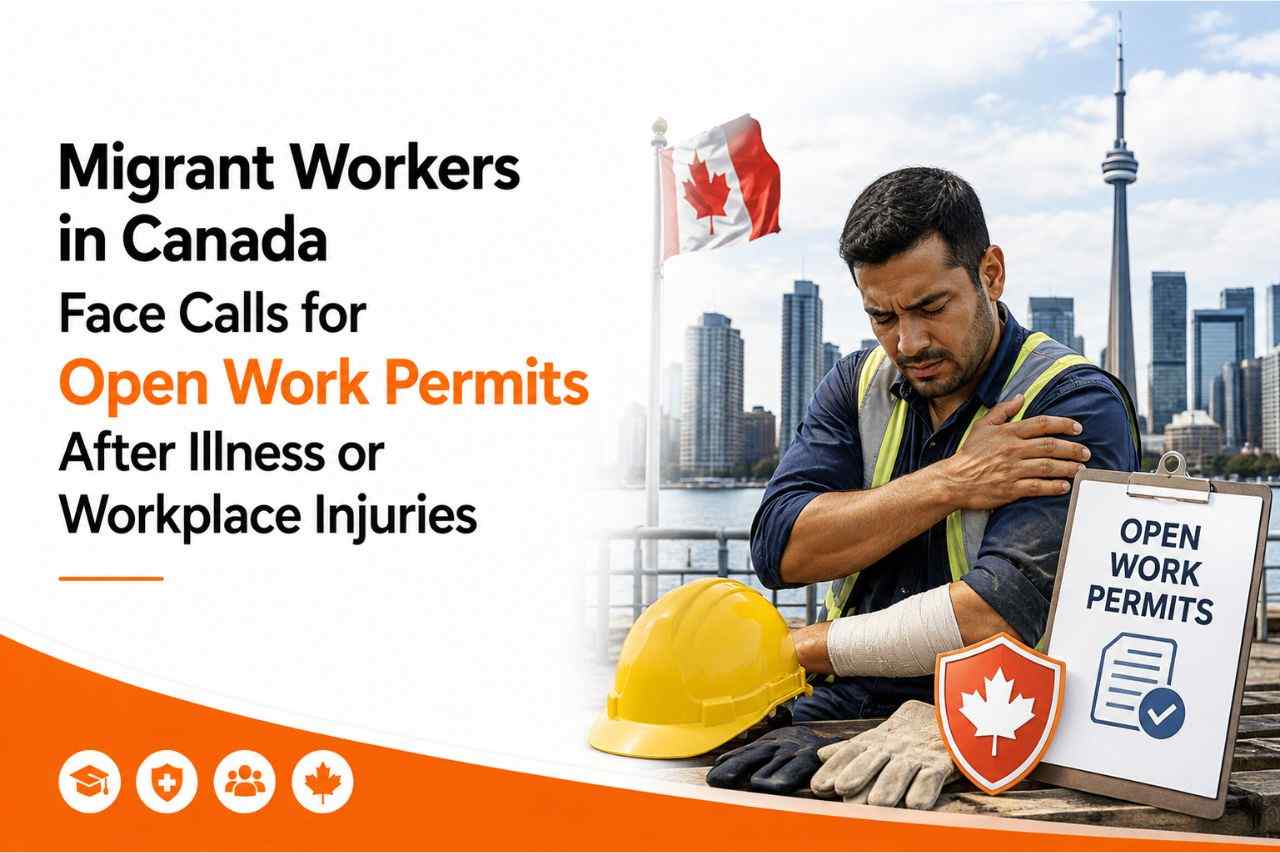

The Canadian Council for Refugees (CCR) is calling on the federal government to expand access to open work permits for seriously injured or ill migrant workers in Canada.
The advocacy group says migrant workers holding employer-specific work permits can face significant challenges if they become seriously injured or develop a medical condition while working in Canada.
Under an employer-specific work permit, a worker’s authorization to work is generally tied to the conditions specified on the permit. Advocates argue that this can create additional uncertainty for workers who are unable to continue in their existing jobs because of illness or workplace injuries.
Why Migrant Workers are Facing Concerns Over Work Permits
Temporary foreign workers can come to Canada through different work permit arrangements. Some hold employer-specific work permits that restrict them to working for a particular employer.
According to the CCR’s statement provided for this report, serious illness or injury can leave some workers in a difficult position.
If a worker is no longer able to perform their existing job, concerns may arise around:
- Maintaining legal status in Canada
- Continuing to work
- Finding alternative employment
- Accessing medical treatment
- Managing household expenses
- Avoiding the loss of immigration status
Advocates argue that greater flexibility through open work permits could help address these challenges.
What is An Open Work Permit?
An open work permit generally allows an eligible foreign national to work for an employer without being restricted to a specific employer or job listed on the permit.
This differs from an employer-specific work permit, which generally identifies the employer and may include other employment conditions.
The distinction can be particularly important for workers whose employment circumstances change unexpectedly.
However, eligibility for an open work permit depends on the specific immigration rules and circumstances that apply to an individual. Not every temporary foreign worker automatically qualifies for one.
CCR Calls for Expanded Access for Injured or Sick Workers
The Canadian Council for Refugees is urging the federal government to expand open work permit access for migrant workers who become seriously injured or ill.
The organization says workers should have a way to remain in Canada legally and support themselves while recovering rather than being placed at greater risk because they cannot continue with their current employer.
The call is an advocacy position. It does not mean that Canada has already introduced a new open work permit category for all injured or sick migrant workers.
This distinction is important for workers and employers following the issue.
How Employer-Specific Permits Can Create Employment Uncertainty
Employer-specific permits can provide Canadian employers with access to temporary foreign workers for particular labour needs.
However, when a worker’s circumstances change, the conditions attached to the permit can become a significant consideration.
For example, a worker who is medically unable to continue performing their existing duties may have to consider how they can maintain authorization to work while dealing with their health situation.
Advocates say an open work permit could provide greater flexibility by allowing an affected worker to seek employment elsewhere rather than being tied to an employer they can no longer work for.
Potential Benefits of Expanded Open Work Permit Access
According to the concerns raised by advocates, expanded access could potentially help eligible workers:
- Remain employed: Workers could have more flexibility to find alternative employment when they cannot return to their original job.
- Maintain financial stability: Continued authorization to work could help affected workers manage living costs while recovering.
- Maintain legal status: Advocates say a clearer pathway could reduce the risk of workers falling out of status because of circumstances beyond their control.
- Access appropriate employment: Workers recovering from an injury or medical condition may need employment that better accommodates their circumstances.
- Reduce vulnerability: Greater mobility between employers could potentially reduce workers’ dependence on a single employer.
What Migrant Workers Should Know Right Now
The CCR’s request should not be interpreted as confirmation that a new federal policy has already been implemented.
Workers facing illness, injury or employment problems should review their individual immigration circumstances and determine what options are currently available to them.
Work permit conditions, status and eligibility for other immigration measures can vary significantly depending on the worker’s situation.
Anyone whose work authorization is approaching expiry should avoid assuming that an advocacy proposal automatically provides continued authorization to work.
Why This Issue Matters for Canada’s Temporary Foreign Worker System
The debate highlights a broader question about how Canada’s temporary foreign worker system responds when workers experience circumstances that make their original employment impossible or unsafe.
Employer-specific work permits can provide employers with access to workers for identified labour needs. At the same time, workers who experience serious health or workplace issues may need flexibility that their original employment arrangement does not provide.
The CCR’s call places this issue before the federal government and asks for broader protection for affected migrant workers.
Frequently Asked Questions
The Canadian Council for Refugees is calling for expanded access to open work permits for migrant workers who are seriously injured or become ill.
Employer-specific permits can restrict a worker’s employment to the employer and conditions specified on the permit. If illness or injury prevents the worker from continuing that job, finding another way to work legally can become challenging.
No. The advocacy statement does not establish automatic eligibility. Open work permit eligibility depends on applicable Canadian immigration rules and an individual’s circumstances.
The information provided describes an advocacy request from the Canadian Council for Refugees. It should not be treated as an announcement that a new universal open work permit program has been introduced.
The worker should review their immigration options as early as possible and seek qualified immigration advice where appropriate. They should not assume that an advocacy proposal changes the conditions of their existing work permit.