


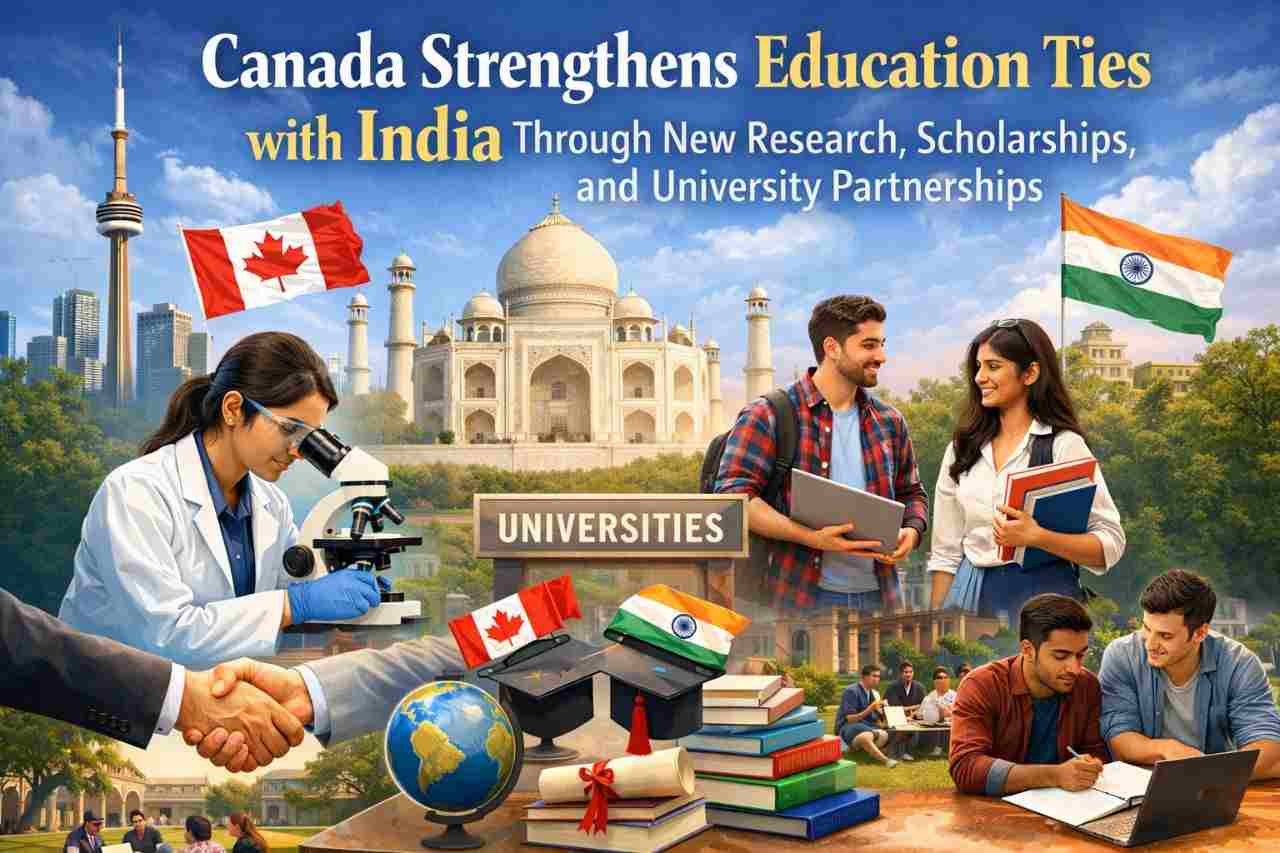
Canada has announced a series of major education initiatives designed to strengthen academic collaboration and expand opportunities for Indian students. The announcement was made during Prime Minister Mark Carney’s official visit to India, marking a significant milestone in Canada-India relations and highlighting the importance of education and talent mobility between the two countries.
The new measures include 300 funded research positions at Canadian universities, up to $100 million in scholarships from the University of Toronto, and 13 new partnerships between Canadian and Indian universities. These initiatives aim to deepen cooperation in research, innovation, and skills development while creating new opportunities for students, researchers, and academic institutions in both countries.
For many international students considering Canada as their study destination, understanding the available academic opportunities and immigration pathways is essential. Through ImmigCanada immigration consulting services, students can connect with a certified Canadian immigration consultant who can guide them through study permit applications, post-graduation work permits, and long-term immigration options in Canada.
New Research Opportunities for Indian Students
One of the most notable announcements from the visit was the creation of 300 funded research placements at Canadian universities. These placements will allow Indian undergraduate students to participate in research projects in collaboration with Canadian academic institutions.
The research positions will focus on areas such as:
- Clean energy and sustainability
- Artificial intelligence and advanced technologies
- Climate change and environmental research
- Global supply chains and economic development
- Public health and biotechnology
These opportunities will allow students to gain hands-on research experience while working alongside leading academics and researchers in Canada.
Programs such as these are designed to build stronger academic connections between universities and prepare students for careers in research, innovation, and emerging technologies.
Expansion of Scholarships and Financial Support
Another key component of the initiative is the significant expansion of scholarship funding. The University of Toronto has committed up to $100 million in scholarships aimed at supporting international students, including those from India.
Scholarship funding plays a crucial role in making international education more accessible. For many students, financial assistance can determine whether they are able to pursue studies abroad.
In addition to university-based scholarships, Canada is also committing $10 million toward Indo-Pacific scholarships to encourage research collaboration between Canadian and international institutions.
These scholarships will support:
- Graduate-level research
- Academic exchange programs
- Collaborative research initiatives
- Talent mobility between Canada and Indo-Pacific nations
This investment reflects Canada’s broader strategy of strengthening international education partnerships while supporting global innovation networks.
New Academic Partnerships Between Canada and India
Another major announcement during the visit was the creation of 13 new academic partnerships between Canadian and Indian universities. These partnerships will allow institutions in both countries to collaborate on research projects, student exchanges, and joint academic programs.
The partnerships are expected to support:
- Joint research initiatives
- Dual-degree programs
- Faculty exchange opportunities
- Collaborative technology and innovation projects
By connecting academic institutions in both countries, these partnerships help promote knowledge sharing and build stronger educational ecosystems.
Canadian Universities Expanding Their Global Presence
The initiatives also include plans for Canadian universities to expand their global presence through new campuses and research centres in India.
Dalhousie University will establish an innovation campus in India, creating a hub for research collaboration and technology development. Meanwhile, the University of Toronto and McGill University will launch Centres of Excellence to support advanced research and innovation partnerships.
These initiatives are expected to strengthen international research collaboration and provide new opportunities for students and academics to work together on global challenges.
Why Canada Remains a Top Destination for Indian Students
Canada has long been one of the most popular destinations for international students, particularly those from India. Several factors contribute to this strong appeal:
- High-quality education system
- Globally recognized universities
- Multicultural and welcoming society
- Opportunities for research and innovation
- Post-graduation work opportunities
Students who complete their education in Canada may also qualify for post-graduation work permits, allowing them to gain Canadian work experience after completing their studies.
Canadian education can also support long-term immigration opportunities. Many international graduates later apply for permanent residence through programs such as Express Entry or Provincial Nominee Programs.
Students often consult a Regulated Immigration Consultant to understand how studying in Canada can lead to career opportunities and permanent settlement pathways.
The new initiatives announced during Prime Minister Mark Carney’s visit represent one of the most significant expansions of Canada-India educational cooperation in recent decades. By creating research placements, scholarship funding, and new university partnerships, Canada continues to strengthen its position as a global destination for education and innovation. These initiatives not only expand opportunities for Indian students but also promote international collaboration in research, technology, and economic development. As educational partnerships between the two countries continue to grow, students and researchers can expect greater opportunities for academic exchange, innovation, and long-term career development. v
Leave a Reply