

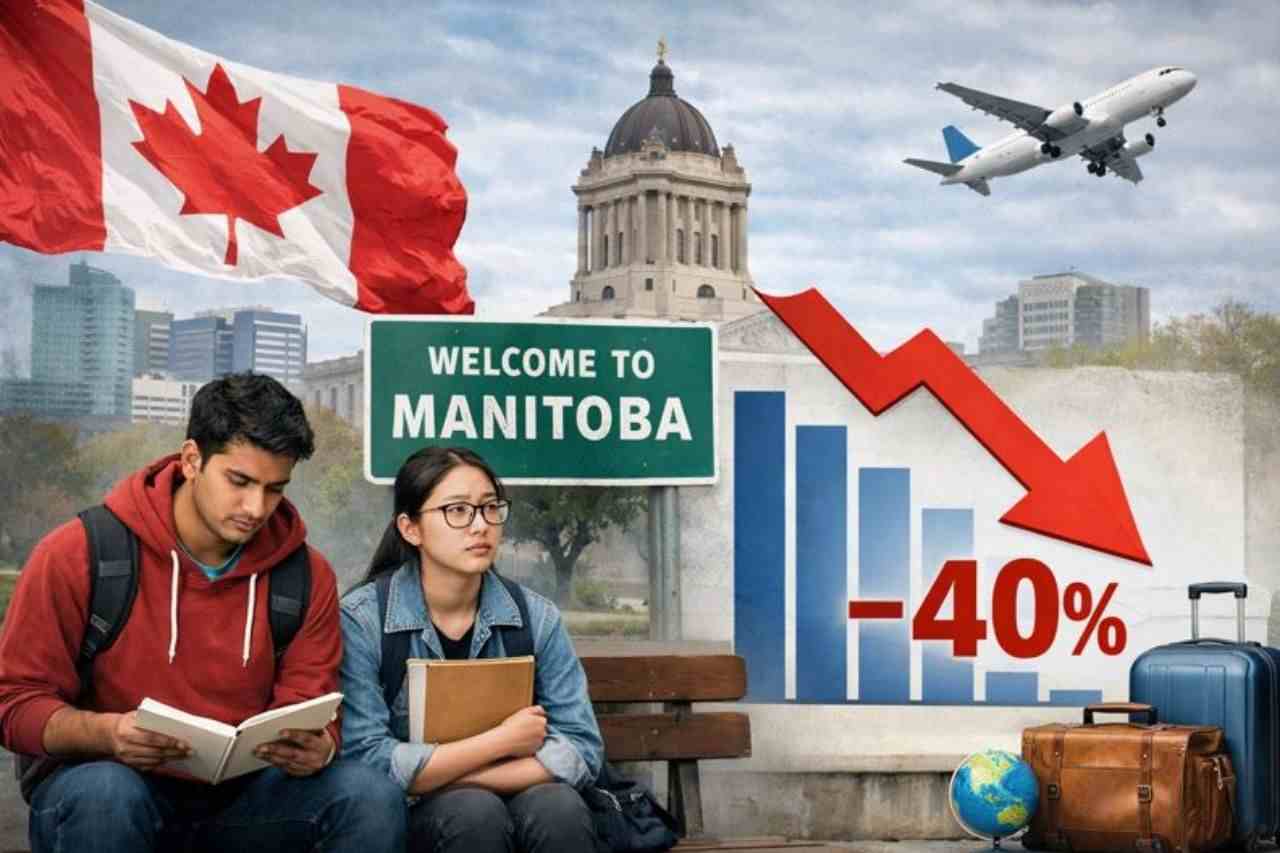

Manitoba’s post-secondary education sector is facing growing financial strain after the federal government reduced international student allocations by 40%, cutting the province’s total from 18,591 seats in 2025 to 11,196 in 2026. The sharp reduction has already triggered falling enrolment numbers and revenue losses across universities and colleges, raising concerns about long-term sustainability and program delivery.
According to the provincial government, the decision was made without prior consultation, leaving institutions with little time to adapt. Advanced Education and Training Minister Renée Cable said the impact is being felt across Manitoba’s education system, particularly as schools rely heavily on international tuition revenue to fund academic programs, research initiatives, and student services.
Why the Federal Cut Is Hitting Manitoba Hard
International students play a critical role in Manitoba’s post-secondary ecosystem. Beyond tuition revenue, they contribute to campus diversity, research capacity, and local economies. Many institutions use international student fees to offset operating costs and maintain affordable tuition for domestic students.
Minister Cable emphasized that the sudden reduction has disrupted long-term planning. Institutions depend on predictable enrolment to invest in staffing, infrastructure, and academic programming. With allocations reduced by nearly half, colleges and universities are now reassessing budgets, delaying expansions, and reconsidering program offerings.
Enrolment Declines and Financial Pressure
Since the federal cap was announced in 2024, Manitoba institutions have reported steep enrolment declines. Lower international intake directly translates into reduced operating revenue, placing pressure on:
- Faculty hiring and retention
- Student support services
- Research and innovation funding
- Campus infrastructure projects
The provincial government has warned that these financial pressures could eventually affect domestic students as well, particularly if institutions are forced to scale back services or raise fees elsewhere.
Provincial Response and Next Steps
Despite the challenges created by the federal decision, the Manitoba government has reaffirmed its commitment to supporting the province’s education system. Officials say they will continue engaging with post-secondary leaders while pushing federal counterparts for solutions that reflect Manitoba’s unique needs.
The government has also stressed that international students are more than economic contributors. They bring global perspectives, strengthen innovation, and often transition into Manitoba’s workforce after graduation, supporting long-term population and labour market growth.
The 40% reduction in international student allocations has placed Manitoba’s universities and colleges in a difficult position, exposing the risks of abrupt policy changes without provincial collaboration. As enrolment declines and financial pressures mount, Manitoba is urging renewed dialogue with Ottawa to ensure the future stability of its post-secondary education system.
For guidance on studying in Canada and understanding how policy changes affect your options, ImmigCanada immigration consulting services can help you plan your next steps with confidence.